 English
 русский
 عربى
عربى


add: North of Gaoxin North Road, east of Jinyun Road, Wannian High-tech Zone, Shangrao City, Jiangxi Province
It is a Tuesday evening in August, and your flower shop has eighteen confirmed bouquet orders for the weekend. The delivery from your usual supplier arrived late, one carton was crushed in transit, and a scratch runs through twelve sheets in the middle of the matte film stack. You open a search window and type where to buy flower bouquet wrapping paper. The results fill the screen with hundreds of options, but none of them say which supplier will still be consistent next month, at the same quality and price.
Here is the short answer from a professional buying perspective: for a flower shop, florist, or wholesale buyer, the best place to buy bouquet wrapping paper at scale is a specialized floral packaging manufacturer or a dedicated floral packaging wholesaler. General online marketplaces are useful for testing a single pattern or covering an emergency order, but they carry retail markups, loose batch control, and little accountability when the paper fails. This guide walks through the four real buying channels, the material differences that affect how a finished bouquet looks, the quality checks that matter before money changes hands, the true cost per usable sheet, and the ordering steps that separate a smooth supply from a recurring problem.
Where Florists Actually Buy Flower Bouquet Wrapping Paper
The buying landscape has four real channels: general online marketplaces, local florist supply distributors, specialized floral packaging wholesalers, and direct packaging manufacturers. Every one of them can sell you a roll of wrapping paper. The differences appear in per-sheet cost, print and thickness consistency, defect rates, and how easy it is to get a replacement when something is wrong.
General Online Marketplaces
This is where most new florists start, and the advantages are honest: low minimum order quantities, fast shipping, and an almost endless choice of designs. The disadvantages grow with volume. Marketplace listings rarely state the paper thickness, coating durability, batch tolerance, or cut accuracy. You can buy one batch that is perfect and a reorder that is visibly lighter in color or slightly smaller in size. For a shop wrapping thirty bouquets a day, that inconsistency becomes a customer-facing problem. Marketplace prices also sit two to four times higher than the same material from a wholesale source, because the marketplace seller works with retail margins. For a hobbyist wrapping five bouquets a week, the markup is acceptable. For a registered business, it quietly taxes every sale.
Local Florist Supply Distributors
Every city with a real flower trade has a distributor that supplies vases, wire, tape, floral foam, and wrapping materials. The local distributor earns its place through immediacy: you can feel the paper before buying and restock the same afternoon. If your shop runs out of the popular matte film on a Friday, local supply saves the weekend. The trade-offs are selection and price. Distributors stock what sells broadly in their region, so they rarely carry a deep pattern library, and their prices run between marketplace retail and manufacturer-direct wholesale. Treat the local distributor as a fill-in channel, not the backbone of your material strategy.
Specialized Floral Packaging Wholesalers
A wholesaler that focuses exclusively on floral packaging offers the middle path. They consolidate products from several factories, carry multiple brands, and ship in wholesale quantities. Their catalogs are more organized than a marketplace search, and their customer service is built for business buyers. The limitation is that they are resellers. Every layer in the supply chain adds cost, and their stock depends on what their own suppliers produced. When a pattern sells out, you wait for their next container, not for the factory to run another batch. With a careful wholesaler, the relationship saves time and the quality is consistent. With a careless one, you absorb their mistakes along with their margin.
Manufacturer-Direct Buying
Buying directly from a packaging factory, which is what manufacturers such as Jiangxi Lixuan New Material Technology represent, changes the purchase in three measurable ways. First, the price reflects factory cost rather than a retail or wholesale markup. Second, the factory controls thickness, coating, printing, and cutting on every batch, so quality stays tied to a documented specification instead of whatever a reseller happened to receive. Third, the product range is deeper. A factory whose core business is floral wrapping materials produces the full ecosystem around the bouquet: wrapping films, cotton paper, kraft paper, ribbons, mesh, wrapping bags, and floral foam. For a shop that wants all its materials to coordinate, one supplier for the whole basket is a significant operational advantage.
Manufacturer-direct buying does require planning. Minimum order quantities run higher, lead times are measured in weeks rather than days, and you cannot walk into a warehouse to inspect goods before paying. That is why the most durable ordering strategy combines channels: manufacturer-direct for core sizes and best sellers, local distribution for emergencies, and a marketplace only for testing a new pattern before you commit to wholesale volume.
| Channel | Typical minimum order | Relative cost per sheet | Quality consistency | Lead time | Best suited for |
|---|---|---|---|---|---|
| Online marketplace | Very low, single pack | Highest | Variable by batch | Days | Testing designs, emergency cover |
| Local distributor | Low to medium | Medium-high | Good but narrow range | Same day | Fill-in orders, seasonal spikes |
| Floral packaging wholesaler | Medium | Medium | Good and curated | One to three weeks | Established shops without factory contacts |
| Manufacturer direct | Higher | Lowest | High, specification-based | Two to six weeks | Volume buying, full-basket sourcing |
Match the Paper Type to the Bouquet's Job
Before choosing a supplier, decide which materials you actually need. The phrase "flower bouquet wrapping paper" covers several distinct product families that are not interchangeable. Each has a different cost structure, a different level of water resistance, and a different effect on the finished bouquet. Buying the wrong family is a practical mistake: it changes how long the bouquet survives and how professional it looks.
Matte Film and Matte Paper
Matte film is the default material for everyday flower shop work. Its non-reflective surface keeps the attention on the flowers, folds without glare, and photographs well for social media. Matte materials come in solid colors, printed patterns, and translucent finishes, which makes them the easiest family to standardize across a shop. A good matte film has consistent color across the roll and a surface that resists scratches and fingerprints. Many professional suppliers offer matte film in 57 x 57 cm or 58 x 58 cm sheets, the standard working size for a hand-tied bouquet. Gold-edged or bordered versions bridge the gap between everyday and premium presentation, because the border adds a finish detail without requiring a separate decorative sleeve.
Kraft Paper
Kraft paper delivers the studio-style look that has defined flower packaging for years. Its strength is functional as well as aesthetic: kraft is thick, holds its shape, and protects stems during transport. For a shop with a natural, rustic brand identity, kraft is the workhorse. It also works beautifully in double-layer wrapping, where a kraft sheet provides structure and a softer inner sheet adds color. Look for kraft that is printed or coated on one side with the reverse left plain; this construction controls cost while delivering a finished appearance. Newspaper-style prints and English-letter patterns on kraft stay popular among florists who serve a younger gift-buying clientele. A florist whose brand leans editorial might standardize on a retro newspaper-style kraft flower wrapping paper for everyday bouquets, because the pattern gives every arrangement the same recognizable look without extra decorative layers.
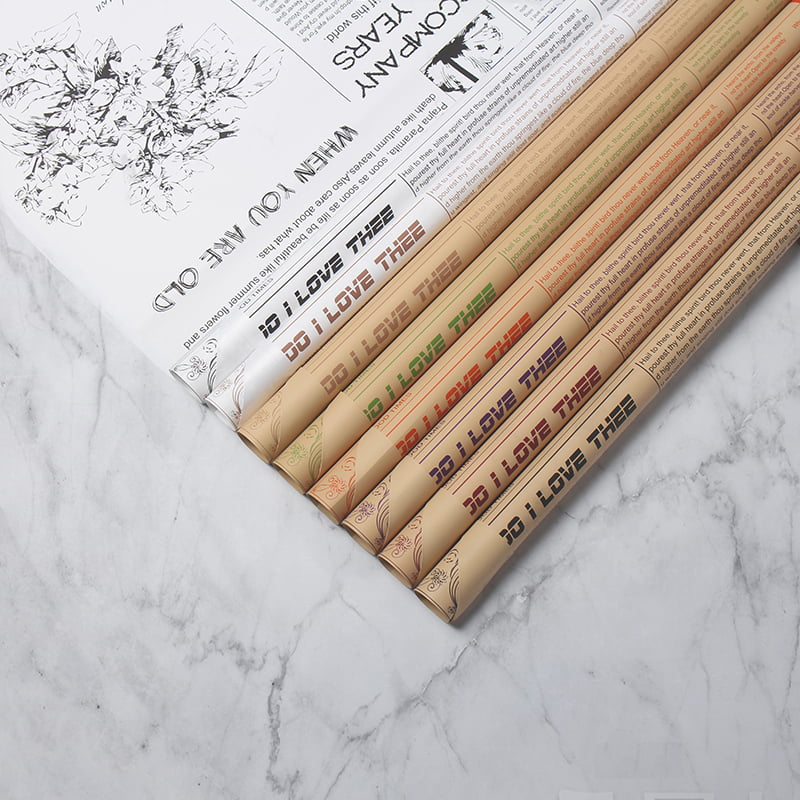 Wholesale MYHC-21 Retro Newspaper Style Cowhide Flowers Wrapping Paper Factory, Jiangxi Lixuan new material Technology Co., Ltd is China wholesale MYHC-21 Retro Newspaper Style Cowhide Flowers Wrapping Paper suppliers...View Product →
Cotton Paper
Cotton paper has a soft, matte texture that feels noticeably more premium than plastic-based films. It is the material florists choose when a bouquet needs to feel substantial and elegant, such as anniversary, sympathy, or high-end gift arrangements. Cotton paper is available in single-sided prints, double-sided two-color combinations, and aluminum-plated finishes that add a subtle reflective sheen. Because cotton paper costs more per sheet, most shops use it selectively: one exterior wrap in cotton paper over a plain interior sheet delivers the premium appearance without doubling the material cost of every bouquet.
Pearlescent Film
Pearlescent film has a shimmering, color-shifting surface that suits celebration bouquets. It is the family behind many wedding, prom, and holiday arrangements. Pearl-film sheets often carry gold edges or patterns such as camellias, daisies, and decorative line art. If celebrations are a meaningful part of your sales, pearlescent film should be in your inventory. The material is strong enough to protect a bouquet in transit, which makes it a common choice for delivery-based flower services that still want a premium look.
Transparent Film and Cellophane
Transparent wrapping does the opposite of decorative paper: it exposes the flowers and lets the bouquet speak for itself. Clear film is essential for bouquets that are placed into metal or cardboard sleeves and is the standard outer layer for mixed market bouquets. The transparent family includes cellophane, OPP film, and "jelly" films with a soft, gel-like texture. Many transparent films come with printed borders or small motifs. Shops that skip transparent film underestimate its protective role: clear wrap holds moisture in, prevents petals from rubbing against other bags, and gives the customer a comfortable way to carry the bouquet without crushing it. For cold-chain delivery, anti-fog transparent films prevent condensation from clouding the inside of the wrap when a refrigerated bouquet enters a warm room.
Plastic Film and Waterproof Coated Film
Plastic-based films, especially BOPP and OPP, are where durability meets cost efficiency. They are the default for volume flower production, market stalls, and any bouquet that will sit in a refrigerated display or travel in a delivery van. The critical specification is waterproofing. A bouquet wrapped in non-waterproof paper will soak through within hours if the stems are wet, leaving water stains on the wrapper and a damp mess in the customer's hands. Waterproof films are coated on one or both sides, and the best versions include anti-fog treatment for cold-chain use. The difference between a 4.5 mil and a 7.5 mil film is the difference between a wrapper that survives one short trip and one that survives a full distribution journey. For a close look at how these two material families compare on moisture, durability, and environmental concerns, see our guide on plastic versus eco-friendly flower wrapping.
| Material family | Common uses | Key property to verify | Typical sheet size |
|---|---|---|---|
| Matte film / paper | Everyday bouquets, gift wrap | Color consistency, scratch resistance | 57 x 57 cm, 58 x 58 cm |
| Kraft paper | Rustic and studio-style bouquets | Thickness, tear strength | 57 x 57 cm, 45 x 50 cm |
| Cotton paper | Premium and occasion bouquets | Surface texture, print clarity | 57 x 57 cm |
| Pearlescent film | Weddings, holidays, celebrations | Color shift, edge finishing | 57 x 57 cm |
| Transparent film | Protective outer wrap, display wrap | Clarity, anti-fog coating | 58 x 58 cm |
| Waterproof plastic film | Transport, cold display, markets | Waterproof coating, gauge thickness | 57 x 57 cm, rolls |
Seven Quality Checks That Separate Good Stock from Problem Stock
Wrapping paper fails in ways that do not show in product photos. The checkout price is easy to compare; the defect rate is not. Professional buyers use these seven checks to evaluate a batch before committing to large quantities.
Thickness and Gauge Consistency
Film thickness is stated in mil, a thousandth of an inch, for plastic films. A 4.5 mil film is a lightweight everyday wrapper; a 7.5 mil film is a heavyweight wrapper for stem-heavy bouquets and transport. Paper products use grammage, the weight in grams per square meter. The specification matters less than the consistency. If a roll varies in thickness across its width, some sheets fold cleanly and others crease or split. Ask for the gauge specification and measure a sample with a caliper if possible.
Print Registration and Color Consistency
Printed patterns should be sharp at the edges, with no double printing or color overlap. Color consistency across batches is the more common failure. Wrapping paper from different production runs rarely matches to the exact shade, and a bouquet assembled with material from two batches will reveal the difference under shop lighting. When you buy from a manufacturer, ask whether the color system is stable across runs and request a sample from the same batch as your intended order.
Cutting Quality and Edges
A square sheet is about more than appearance. If the cutting blade is dull, sheets develop feathered or rough edges that catch light and show in photographs. If sheets are not cut square, every fold fights you. Check whether the stack is packed with the same print orientation and whether it is free of loose fibers and dust. For transparent films, confirm that cut edges lie flat against the bouquet instead of curling outward.
Coating Durability
Waterproof coatings can fail in two ways: they can separate from the base film, or they can fail along the edges where the bouquet is handled most. A quick water-bead test is useful, but also rub the coated surface with a damp finger. If the color bleeds or the coating lifts, the sheet will fail long before the flowers do. When a supplier claims waterproof performance, ask for a specific product with a documented specification, such as a 100% waterproof six-color flower packaging film, rather than a general promise that "most" of the range is water-resistant. Anti-fog coatings require a separate check: the coating must be on the inside of the wrap, and the film must be stored so the coating does not degrade.
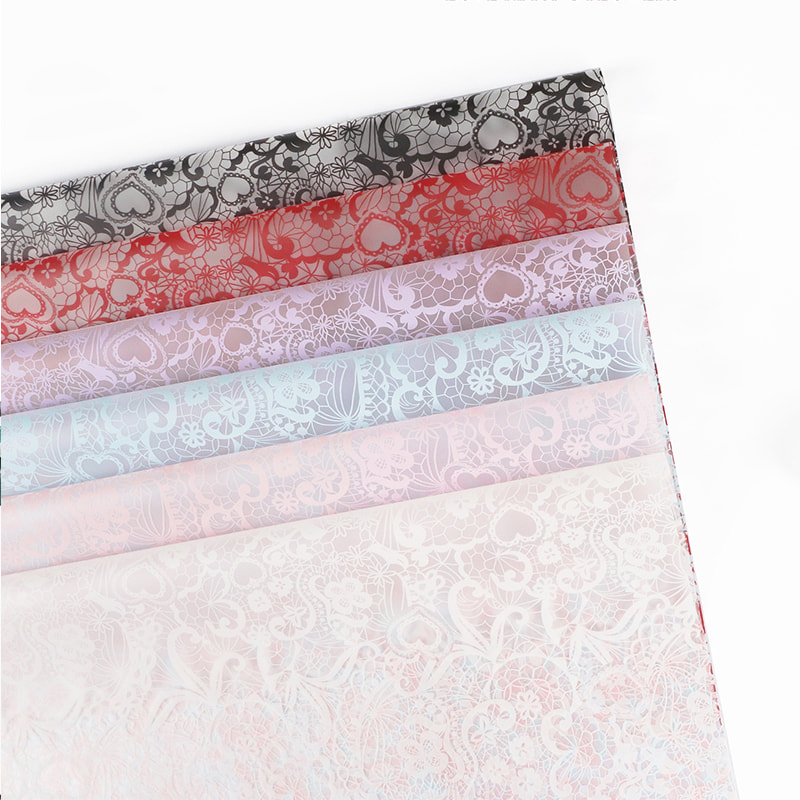 Wholesale 100% Waterproof 6-color flower packaging film Factory, Suppliers - JiaJiangxi Lixuan new material Technology Co., Ltd is China wholesale 100% Waterproof 6-color flower packaging film suppliers and factory,10...View Product →
Fold Memory and Crease Resistance
Some films stretch and hold a crease; others spring back and make the bouquet look untidy. The behavior depends on the resin and lamination. A good wrapping film is rigid enough to hold the shape of the bouquet but flexible enough to fold without cracking. This property can only be verified by hand. If you are ordering sight unseen, request samples and fold them the way you fold a real bouquet, including the sharp creases at the base of the wrap.
Size Accuracy
The difference between a 57 x 57 cm sheet and a 58 x 58 cm sheet is one centimeter per side, and that centimeter changes how the paper wraps around a typical bouquet. Suppliers publish nominal sizes; the real sheet can vary by half a centimeter or more. In production, that variation changes how many sheets fit in a carton and how the wrapper has to cut the material. Confirm the cutting tolerance, not just the listed size.
Shipping Protection
Wrapping paper arrives in cartons that are heavy and easy to crush. A careful supplier packs rolls in solid cartons with internal restraint; a careless supplier ships loose. Damaged edges, crushed rolls, and moisture-stained paper all trace back to packing. Before placing a large order, ask what the export packaging looks like. If the supplier cannot describe it, treat that as a warning.
What a Sheet of Wrapping Paper Actually Costs You
Buyers who compare only the unit price miss the real cost picture. The actual cost of wrapping paper includes three components: the price per sheet, the waste rate, and the labor time the paper saves or wastes during wrapping.
Price per Sheet
Suppose a wholesale case of 500 sheets costs $40. That is eight cents per sheet. A typical bouquet uses two to three sheets, one for the primary wrap and one or two for the protective collar, so the paper cost per bouquet is sixteen to twenty-four cents. Compare that with a marketplace price of twenty-five cents per sheet; the same bouquet jumps to fifty to seventy-five cents before a single stem is added. Over a year of steady sales, that difference is larger than most shop owners expect, and it comes out of the same margin that pays for rent and labor.
Waste Rate
Cheap paper that tears during wrapping hides its cost in the waste bin. If one sheet in ten is unusable, a case of 500 sheets yields only 450 usable sheets, and the effective price rises from eight cents to nine cents per usable sheet. If the wasted sheet is the printed front fold, the loss is worse. Professional-grade material in the correct gauge and coating has a waste rate near zero in experienced hands. That reliability is worth more than the small difference in purchase price.
Labor Cost
Paper that folds easily, holds a crease, and does not cling or slide saves minutes per bouquet. Across a production day of forty bouquets, those minutes become an hour. Labor is usually the largest cost in a flower shop, so every minute spent fighting bad material comes directly out of profit. This is why experienced buyers choose material that suits their wrapping style, not just material that looks similar in a photograph.
Freight and Landed Cost
Wrapping paper is bulky and light, which makes it expensive to ship relative to its value. A local distributor may charge twenty-five cents per sheet but deliver in the same week with no freight cost. A manufacturer-direct order might cost eight cents per sheet plus freight, and the freight can add two to four cents per sheet for an express service. The correct comparison is the landed cost per usable sheet, including freight, customs fees, and the cost of holding inventory. When you calculate this way, the choice between channels becomes factual instead of emotional.
How Buying Priorities Differ by Business Model
The right supplier also depends on the type of business doing the buying. A neighborhood flower shop, a market stall, an event florist, and an online flower delivery service have different constraints, and the same purchase does not serve all of them equally.
Neighborhood Flower Shops
Retail shops serve a repeating local clientele, so consistency is more important than novelty. The same matte film in the same three colors should be available every week. These buyers benefit most from a manufacturer relationship with a standing order, supported by a local distributor for fill-in needs.
Market Stalls and Volume Wrappers
Stalls that wrap dozens of single-stem or mixed bunches per day face intense cost pressure. Waterproof plastic film in 4.5 mil or 7.5 mil thicknesses is often the backbone, because it protects stems and survives the stall environment. Landed cost per sheet is the dominant factor, which makes manufacturer-direct or high-volume wholesale the natural choice.
Event and Wedding Florists
Event work values finish and coordination. Cotton paper, pearlescent film, and gold-edged matte materials command their price here, and the ability to order a coordinated set of paper, ribbon, and mesh from one supplier is a serious time saver. Seasonal design access matters more than the lowest per-sheet price.
Online Flower Delivery Services
Delivery-based businesses depend on protective packaging. Transparent film with anti-fog coating, waterproof outer wraps, and durable bags prevent refunds and bad reviews. The priority is technical performance and reliability under transport conditions, so documented specifications are the deciding factor.
Why a Packaging Manufacturer Deserves a Place on Your Supplier List
Most professional buyers eventually move their core volume to a manufacturer, and the reason is not simply the lowest number on a spreadsheet. It is the ability to work with a supplier that controls the variables that make bouquets look consistent, order after order. A manufacturer that publishes a structured product catalog, such as the flower wrapping paper and film catalog at Jiangxi Lixuan, makes this verification step straightforward: every item has a code, a material description, and a specification.
Consistency Through Production Control
A dedicated packaging manufacturer runs its own production line, so thickness, printing, coating, and cutting are tied to internal specifications. The most visible sign of this discipline is serialized product codes. When every design carries a stable product number, you can order the same item in March and in September with the same expectation. This is the difference between ordering "the kraft paper with the newspaper print" and ordering a material with a defined specification that the factory can reproduce. The same logic applies to the many numbered designs found throughout a serious packaging catalog.
A Full Range Reduces Vendor Overhead
The quiet advantage of buying from a packaging manufacturer is the breadth of the supporting range. A bouquet needs more than wrapping film. It needs ribbon, netting, a wrapping bag for transport, and floral foam to keep stems hydrated. When those come from different suppliers, you manage multiple vendors, multiple freight charges, and multiple quality standards. A manufacturer that produces the full range collapses that workload. The wrapping design, the ribbon color, and the bag size were likely designed to work together, which is exactly what an efficient production florist needs.
Functional Materials for Hard Conditions
For bouquets that travel in a refrigerated van or sit in a wet display case, the waterproof specification is not optional. A film that fails under condensation ruins the arrangement inside it. This is where documented product specifications matter more than marketing language. A product defined as waterproof, in a stated number of colors and a stated sheet size, belongs in any shop that delivers bouquets in warm or rainy weather, sells at farmers markets, or supplies corporate events where bouquets leave the shop in bulk.
Seasonal Design Depth
Flower demand moves in visible cycles: Valentine's Day, Mother's Day, wedding season in spring, and the winter holiday run. Wrapping material follows the same curve. A manufacturer with a deep pattern library gives you access to the seasonal design that fits your market without holding twelve months of inventory. A gold-edged solid pearlescent film, for example, is one of the most reliable choices for holiday and wedding work, because the metallic edge adds formality without a loud pattern. Because such designs exist as standard catalog items, you can order a controlled quantity for the season and reorder if the design sells through. A gold-edged solid pearlescent film flower wrapping paper is the kind of item that carries a premium look at a reasonable per-sheet cost, which is why it appears so often in event-focused shops.
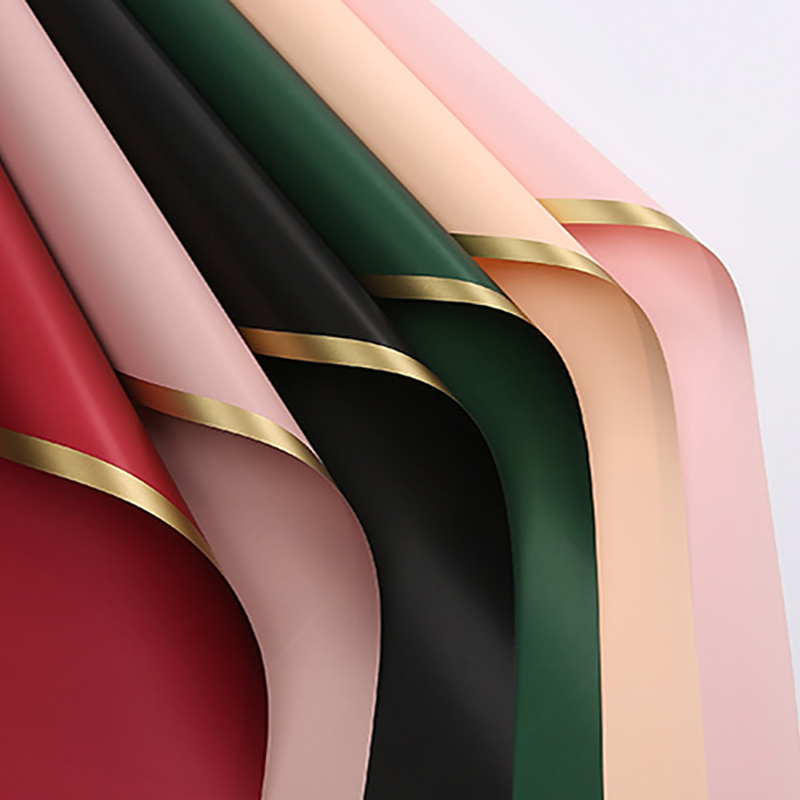 Wholesale MYHC-27 Gold Edge Solid Pearlescent Film Flower Wrapping Paper FactoryJiangxi Lixuan new material Technology Co., Ltd is China wholesale MYHC-27 Gold Edge Solid Pearlescent Film Flower Wrapping Paper supplie...View Product →
When a Local Supplier Beats Buying Direct
The honest part of this guide is that manufacturer-direct buying is not always the right answer. Local supply wins in four situations. First, emergency restocks: if you underestimated demand for a popular pattern and the weekend is coming, a nearby distributor is the only channel that can help. Second, small trial orders: buying a single pack from a local supplier is faster than waiting weeks for a factory sample. Third, freight economics: for a very small order, the freight cost per sheet can exceed the entire value of the material, making local the smarter choice even at a higher unit price. Fourth, in-person inspection: some buyers simply need to feel the coating and fold the sheet before committing, and no online description replaces that.
The right way to use local supply is as a complement to a manufacturer relationship, not a substitute. Keep your everyday best sellers on a manufacturer-direct schedule, keep a two-week buffer of those materials, and let the local distributor cover the unexpected. This structure keeps your average cost low while preserving the flexibility that every seasonal business needs.
How to Place a Manufacturer Order That Goes Smoothly
Working with a manufacturer is a process, and the process is easier if you understand the steps before you begin. The sequence below reflects how packaging factories actually operate, from first contact to delivery.
Request Samples Before Volume
Every serious packaging factory will send samples, usually at low or no cost for established products. Request two or three sheets of each item you plan to order. Fold them, wet them, scratch them, and photograph them under your shop lights. The sample is the baseline against which you will judge every later batch. If the factory cannot provide a physical sample, ask for a swatch with the exact specification in writing.
Confirm the Specification in Writing
Size, gauge, coating, print orientation, pack quantity, and carton quantity should all appear in writing before payment. A verbal description is not a specification. Confirm whether the stated size is the actual cut size or the nominal size, and confirm whether the waterproof claim applies to both sides of the material. Written specifications protect both you and the supplier, because they define the acceptance criteria for the shipment.
Clarify Minimums and Mixed SKUs
Many manufacturers allow mixed-SKU orders, where you can combine several designs within one material family to reach the minimum order quantity. This is a practical way to test a season's worth of designs without committing to a full production run of each. Ask whether mixed-SKU orders carry a different price and whether the minimum applies per design or per order.
Confirm Lead Time and Seasonal Timing
Lead time includes production time, freight, customs clearance, and road delivery. A typical manufacturer order from East Asia to the United States or Europe takes two to six weeks depending on the shipping method. Order seasonal stock six to eight weeks before the season begins. If you plan to order for Valentine's Day, the conversation with the supplier should start in November, not February.
Set Up Freight and Payment Terms
Confirm the currency, the deposit percentage, the balance payment timing, and the incoterms before you commit. Ask what happens if a shipment is defective or damaged in transit. A responsible manufacturer will describe the replacement policy clearly. Freight is usually arranged by the buyer with help from the supplier's shipping desk, so request the carton dimensions and weights in advance and ask which ports the factory ships from.
A Final Checklist Before You Place Your Next Order
Much of buying wrapping paper well is preparation. Use this checklist for both a first order with a new supplier and a reorder with an existing one.
- Order samples first. Judge the material against the way your shop actually wraps.
- Get every specification in writing. Size, gauge, coating, print orientation, and pack quantity.
- Check batch consistency. Ask whether the color and thickness are stable across production runs.
- Clarify the minimum order. Confirm whether mixed-SKU orders are allowed and how pricing changes.
- Verify the lead time. Add production, freight, and customs time to your seasonal calendar.
- Confirm payment and terms. Agree on currency, deposit, balance timing, and the defective-shipment policy.
- Review export packaging. A solid carton protects the paper; a loose one destroys it.
- Keep a buffer. Hold at least two weeks of core materials above normal consumption.
- Start small. Introduce one design and one material family, verify the execution, then expand.
The best place to buy flower bouquet wrapping paper is the one that matches your volume, your design direction, your quality tolerance, and your planning horizon. A marketplace order can solve a single weekend. A local distributor can handle unexpected demand. But for the core materials your shop uses every day, a manufacturer that controls its own production gives you the price, consistency, and range that turn wrapping from a daily gamble into a routine part of the day. Verify the specification, order a sample, start with a controlled quantity, and build the relationship. That is how a packaging purchase becomes a supply advantage.
 +86-18270363850
