 English
 русский
 عربى
عربى


add: North of Gaoxin North Road, east of Jinyun Road, Wannian High-tech Zone, Shangrao City, Jiangxi Province
A florist in a small shop has just finished arranging a mixed bouquet of garden roses and eucalyptus. The customer needs it wrapped, and the only paper within reach is a roll of leftover holiday gift wrap from the shop's seasonal display. Can it be used? Technically, yes. But whether the bouquet arrives at its destination looking fresh and professional depends on a handful of factors that most people never consider when reaching for that roll.
The direct answer to the question "can you use wrapping paper for flower bouquet?" is yes, with conditions. Gift wrap, craft paper, tissue paper, and even newsprint have all been used successfully to wrap flowers. The condition is that the paper must handle moisture without falling apart, support the weight of the stems without tearing, and look appropriate around live botanicals rather than manufactured gifts. These are not trivial considerations. A bouquet wrapped in the wrong paper can wilt faster, leak water onto the recipient's lap, or collapse before it reaches the door.
We manufacture flower wrapping paper and film professionally, and we see the difference between ordinary paper and purpose-built flower wrap daily. Jiangxi Lixuan New Material Technology Co., Ltd. supplies wrapping materials to florists, flower markets, and delivery services. This guide draws on that experience to explain what works, what fails, and how to decide whether your wrapping paper is suitable for a bouquet.
Why This Question Comes Up
The question tends to surface in practical situations. A home crafter has extra gift wrap from a birthday party and a handful of garden flowers. A small business owner wants to reduce packaging costs and wonders whether the wrapping paper already in stock can double for bouquets. A customer receives flowers wrapped in a decorative paper and asks whether a bouquet can be wrapped the same way at home.
These are all reasonable starting points. Gift wrapping paper is abundant, inexpensive, and available in a virtually unlimited range of colors and patterns. Compared to specialty flower wrapping paper, which is sold mainly through floristry wholesalers and online suppliers, gift wrap is easier to find at short notice. When a bouquet needs to be wrapped in the next ten minutes, the closest roll of paper wins.
There is also a stylistic argument. The casual, artisan look of a bouquet wrapped in brown kraft or newsprint-style paper has been popular at farmers' markets and boutique flower shops for years. That aesthetic deliberately borrows from craft paper and gift wrap. So the question is not just about convenience. It is also about design: people see professional florists using papers that resemble gift wrap and reasonably ask whether the same thing would work in their own hands.
The honest answer is that it depends on the kind of paper, the condition of the stems, the length of transport, and the presentation you are trying to achieve. In the sections that follow, we break down the physical behavior of paper around fresh flowers, the paper types that genuinely work, the ones to avoid, and the techniques that make almost any paper usable.
What Happens When Regular Wrapping Paper Meets Fresh Flowers
To judge whether a piece of wrapping paper is suitable for a bouquet, it helps to understand what actually happens to paper in the presence of cut flowers. Flower wrapping is not the same as gift wrapping because the contents are alive, wet at the stem ends, and physically heavy in an unbalanced way. Four specific problems arise.
Moisture Penetration
Freshly cut flower stems release moisture continuously. The base of a bouquet, where all the stems are bundled together, collects most of that water. When paper touches this wet zone, it begins to absorb moisture almost immediately. Tissue paper becomes translucent and then tears. Thin gift wrap develops soft spots and stains. Kraft paper holds up longer because its fibers are dense, but even kraft will eventually soak through under direct contact with cut stems.
The moisture problem is made worse by the rubber band or floral tape that bundles the stems. Water travels along the stems and collects right at the binding point, which is exactly where the wrapping paper is gathered and folded. That concentrated wet spot is the first place a paper wrapper fails.
Structural Stress
Ordinary gift wrapping paper is designed to cover a box. A box is rigid, lightweight, and evenly shaped. A bouquet is none of those things. The flower heads are heavy and spread out at the top, while the stems form a narrow, dense cluster at the bottom. The paper must hold this unbalanced shape without tearing at the folds.
A heavy bouquet of roses, lilies, or hydrangeas can easily weigh a kilogram when the stems are fully hydrated. Gift wrap with a weight of 60 to 80 grams per square meter is simply not engineered to support that load. Tearing usually starts at the crease where the paper folds around the stem bundle, and once a tear begins, it runs quickly along the grain of the paper.
Condensation
Bouquets often move between environments with very different temperatures. A bouquet stored in a floral fridge at 4 degrees Celsius and then carried into a warm room at 22 degrees Celsius will develop condensation. Moisture from the air condenses on the inside of the wrapper. Paper absorbs that condensation, loses its crispness, and begins to sag against the flowers.
This is why professional flower packaging films include anti-fog treatments. An anti-fog coating prevents water droplets from forming on the interior surface of transparent films, keeping the wrapper clear and the flowers visible. Regular gift wrap has no such protection, and its opacity means the condensation is hidden until the paper becomes visibly damp and limp.
Visual Clash
The fourth issue is aesthetic. Gift wrap is often printed with festive motifs, bold geometric patterns, or seasonal slogans. Around a bouquet, these prints can compete with the natural colors of the petals. A pattern that looks cheerful on a birthday present can look loud and distracting around a delicate arrangement of peonies. Florists tend to select wrapping materials with muted tones, subtle textures, or simple prints precisely so that the flowers remain the focal point.
None of these problems are insurmountable. Each has a workaround, and many can be managed with simple techniques. But they explain why the flower packaging industry exists as a separate category from general stationery and gift wrap.
Key Differences: Gift Wrap Versus Flower Wrap
The table below compares the typical characteristics of general gift wrapping paper and purpose-made flower wrapping paper. These are general observations rather than absolute rules; individual products vary widely within both categories.
| Property | Regular Gift Wrapping Paper | Flower Wrapping Paper |
|---|---|---|
| Typical basis weight | 60–100 gsm | 80–150 gsm, or laminated film equivalent |
| Water resistance | Low to none | Often waterproof or coated |
| Tear strength | Moderate, tears at folds | Reinforced or thicker for wet stems |
| Common sizes | Rolls about 70 cm wide, designed for boxes | Sheets of 57×57 cm or 58×58 cm, matched to bouquet proportions |
| Print style | Seasonal, festive, branded | Floral, muted, textured, solid shades |
| Condensation control | None | Anti-fog options available |
| Biodegradability | Varies widely | Recyclable options in kraft and cotton papers |
| Cost per sheet | Low but variable | Slightly higher but optimized for bouquet use |
These differences matter most when bouquets are prepared in quantity or for delivery. A single bouquet handed directly to a recipient within minutes may not strain the paper's limits at all. But a florist preparing twenty bouquets for a Saturday morning delivery run cannot afford to have paper tear or leak on even one of them. That is why wholesale flower wrapping suppliers produce papers in standard bouquet sizes with specific coatings, rather than relying on general gift wrap.
Paper Types That Work Well for Bouquets
If you choose to use wrapping paper for a bouquet, some types of paper perform dramatically better than others. Here is a practical breakdown of the options, based on how they behave around fresh flowers.
Kraft Paper
Brown kraft paper is the classic, most reliable choice. It is strong, inexpensive, and available in rolls that are simple to cut into bouquet-sized squares. The natural tan color has a rustic, artisanal look that complements almost any flower palette. Kraft paper is denser than typical gift wrap, so it holds its shape around a bouquet without tearing at the folds. It is not fully waterproof, but it is water-resistant enough for short transport as long as the stems are not dripping wet.
For a commercial option, our retro newspaper-style kraft flower wrapping paper combines the natural kraft surface with a printed newsprint design and a pearlized film backing. That combination gives shops the craft look while adding durability that plain kraft lacks.
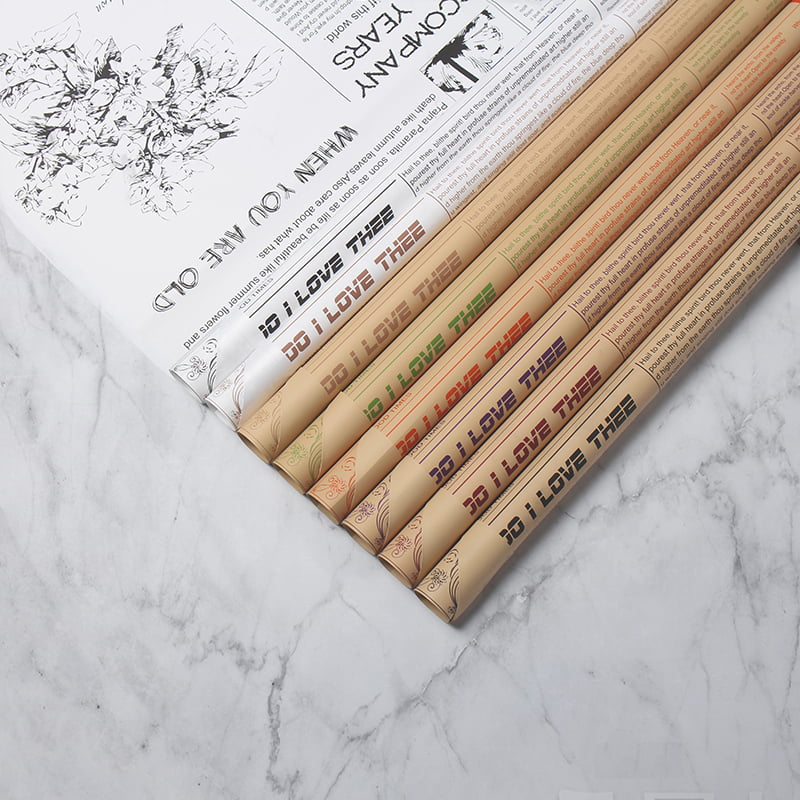 Wholesale MYHC-21 Retro Newspaper Style Cowhide Flowers Wrapping Paper Factory, Jiangxi Lixuan new material Technology Co., Ltd is China wholesale MYHC-21 Retro Newspaper Style Cowhide Flowers Wrapping Paper suppliers...View Product →
When choosing kraft paper, look for a weight of at least 80 gsm. Thinner kraft will crease too easily. If the paper has a shiny or laminated backing, it will be more resistant to moisture, which extends the useful life of the bouquet wrapper.
Tissue Paper
Tissue paper is light, translucent, and excellent for adding soft volume around the flower heads. It is commonly used as an inner layer between the blooms and an outer wrapping, because it provides a frosted veil of color without adding weight. A bouquet wrapped in two or three layers of tissue can look full and generous even when the underlying arrangement is modest.
The drawback is durability. Tissue paper has very little wet strength, and it disintegrates quickly if it contacts water. Use tissue paper only as an inner layer, always with an outer wrapper that provides structure. It is also worth noting that high-quality tissue paper with a longer fiber content resists tearing better than cheap, short-fiber tissue.
Butcher Paper
Butcher paper is similar to kraft but usually white or off-white. It provides a clean, minimalist backdrop that makes flower colors pop. Many florists keep a roll of white butcher paper for everyday wrapping because it gives a polished look without needing a pattern. It is also food-safe, which reassures customers that nothing toxic is touching their stems. For a simple, modern presentation, white butcher paper is hard to beat.
Newsprint and Printed Papers
Newsprint-style wrapping paper has been a staple of the artisan flower movement. Real newspaper pages are too thin and acidic to be safe or practical for bouquets, but purpose-made newsprint flower wrap, which is essentially kraft paper printed to look like a newspaper, offers the right combination of strength and style. The printed text creates visual interest while the paper base provides durability.
If you are using printed gift wrap with patterns, choose patterns that are small-scale and subtle. Large, bold prints tend to overwhelm the flowers. Neutral colors, line drawings, and letterpress-style text are safer choices than loud geometric patterns.
Mulberry Paper and Handmade Papers
Mulberry paper, also called rice paper, is valued for its delicate surface and visible fibers. It has a texture that cannot be imitated by machine-made paper, and it photographs beautifully. For wedding bouquets and formal presentations, it is a popular choice because of its handcrafted feel.
The trade-off is cost and durability. Handmade papers are more expensive and tear more easily than kraft or butcher paper. They also absorb moisture quickly because of their loose fiber structure. Reserve these papers for presentation bouquets that will not travel far, and always include a moisture barrier between the stems and the paper.
Paper Types to Avoid
Knowing which papers fail is as useful as knowing which ones succeed. The following categories are common sources of disappointment when used around fresh flowers.
Heavy cardstock and scrapbooking paper are the first to avoid. Thick, stiff paper cannot be gathered smoothly around a bouquet. It creates harsh angles, refuses to mold to the stem cluster, and may bruise petals where it presses against the flower heads. Cardstock was designed for flat surfaces, not rounded, organic shapes.
High-gloss gift wrap is another poor choice. The shiny coating is usually a plastic or wax layer that traps moisture against the stems. Because the coating gives the paper a slippery surface, the wrap loosens as the bouquet is carried. The glossy finish also catches light in a way that can make the flowers appear dull by contrast.
Foil and metallic papers are popular during the holidays, but they are completely non-porous. Any condensation or cut-stem moisture stays trapped inside, creating a humid microclimate that accelerates bacterial growth on the stems. The foil also crinkles loudly and cannot be gathered into the soft folds that florists rely on. If you want a metallic accent, use it as a small decorative ribbon rather than as the main wrap.
Papers decorated with glitter, stickers, or adhesive tape should be avoided entirely. Glitter sheds onto the flowers and the recipient's hands. Adhesive residue can transfer to the stems and damage plant tissue. Clean paper is always better for flowers.
Finally, very thin, flimsy wrapping paper from discount stores is a false economy. It feels light and cheap in the hand, and it will tear at the stem bundle before the bouquet reaches its destination. If the paper rips easily when you tug on it, it will not hold a bouquet.
How to Make Regular Wrapping Paper Work
If you have decided to use gift wrap or craft paper that is not specifically designed for flowers, several techniques can make it perform acceptably. These methods are used by home crafters and are also taught in floristry courses for situations where a specific decorative paper is required for a design.
First, create a moisture barrier. Before wrapping the stems, cover the lower half of the stem bundle with a piece of plastic film, a small plastic bag, or a waterproof sleeve. This is the single most effective way to protect paper that is not water-resistant. The barrier catches the moisture and prevents it from soaking into the wrapper. It also keeps the paper clean if the bouquet is placed in water or carried through rain.
Second, use a double-layer construction. Place a plain sheet of kraft or tissue paper inside the decorative gift wrap. The inner layer absorbs moisture and takes the structural stress, while the outer layer provides the visual finish. This approach also creates the volume and depth that make bouquets look substantial. Many professional florists use multi-layer wrapping even with flower-specific papers, because it improves both protection and presentation.
Third, avoid sharp creases. Gift wrap is often folded with crisp creases, but around a bouquet, soft gathers perform better. Pinch the paper together at the stem level and let it flare outward. Soft gathers distribute the tension across a wider area of paper, which reduces tearing and produces a more natural, graceful silhouette.
Fourth, keep the stems short. A stem length of 20 to 25 centimeters from the binding point is ideal for hand-tied bouquets. Shorter stems mean less leverage at the fold, which reduces the strain on the paper. This also makes the bouquet easier to carry and more proportionate to the wrapper.
Fifth, secure the stem bundle before wrapping. A rubber band or floral tape applied one-third of the way up the stems holds the bouquet together and prevents individual stems from shifting. When the stems are stable, the paper only has to do the decorative work of enclosing them, not the structural work of keeping the arrangement aligned.
Step-by-Step: Wrapping a Bouquet in Standard Gift Wrap
Here is a reliable method that works with kraft paper, medium-weight gift wrap, or newsprint-style paper. The technique produces a clean, professional result without specialty materials.
- Prepare the bouquet. Remove any foliage that would sit below the water line, so no leaves touch the wrapping paper. Trim the stems to a uniform length of roughly 20 to 25 centimeters. Bind the stems with a rubber band about one-third of the way up from the cut ends.
- Protect the stems. Wrap the lower portion of the stems in a small piece of plastic film or a waterproof sleeve. This step is not optional when your paper is not water-resistant.
- Cut the paper. For a standard bouquet, a square of paper about 50 by 50 centimeters works well. Larger bouquets need a larger square, roughly 60 by 60 centimeters. If the paper comes in a roll, cut the square with scissors rather than tearing, because torn edges look unprofessional.
- Position the bouquet. Place the bouquet diagonally on the paper, with the flower heads toward one corner and the stems extending across the center. The diagonal position allows the four corners of the paper to come up around the blooms naturally.
- Fold the bottom corner over the stems. Bring the corner closest to the stem ends up and over the stem bundle. This forms the back of the wrapper and gives the bouquet its support.
- Bring the side corners around the front. Fold the left and right corners over the front of the bouquet, crossing them gently at the stem level. Adjust the tension so the paper hugs the blooms without crushing them. Tuck the corners under the stem bundle if you want a tidy finish.
- Secure and finish. Tie a ribbon, twine, or a strip of coordinating paper around the gathered section at the stem level. Trim any paper that extends awkwardly beyond the flowers. For a polished collar, fold the top edge of the paper down by about two centimeters before tying.
For a more detailed demonstration with variations for different paper styles, our DIY flower wrapping guide covers several techniques in greater depth, including hand-tied and spiral arrangements.
Waterproofing: The Detail That Decides the Outcome
If there is one factor that separates successful bouquet wrapping from failed bouquet wrapping, it is waterproofing. Cut flower stems leak water at a steady rate, especially in the first hours after trimming. Even when the stems are wrapped in a moisture barrier, the paper around them can still wick humidity from the air in a cold environment, especially if the bouquet is refrigerated or transported in an insulated van.
Professional flower wrapping films are engineered with this in mind. Materials such as BOPP and OPP provide a fully waterproof barrier while remaining transparent or lightly tinted. Some are treated with anti-fog agents to prevent condensation droplets from forming inside the wrapper. This is particularly important for bouquets that move from a floral fridge to a warm delivery vehicle, because the temperature change is severe enough to fog any untreated surface.
Many florists choose purpose-made waterproof films even when the aesthetic goal is a natural, craft look. Our 100 percent waterproof six-color flower packaging film allows shops to coordinate the wrapper with the flower colors while still providing complete moisture protection. It behaves like a soft film, not a rigid plastic sheet, so it gathers naturally around the stems.
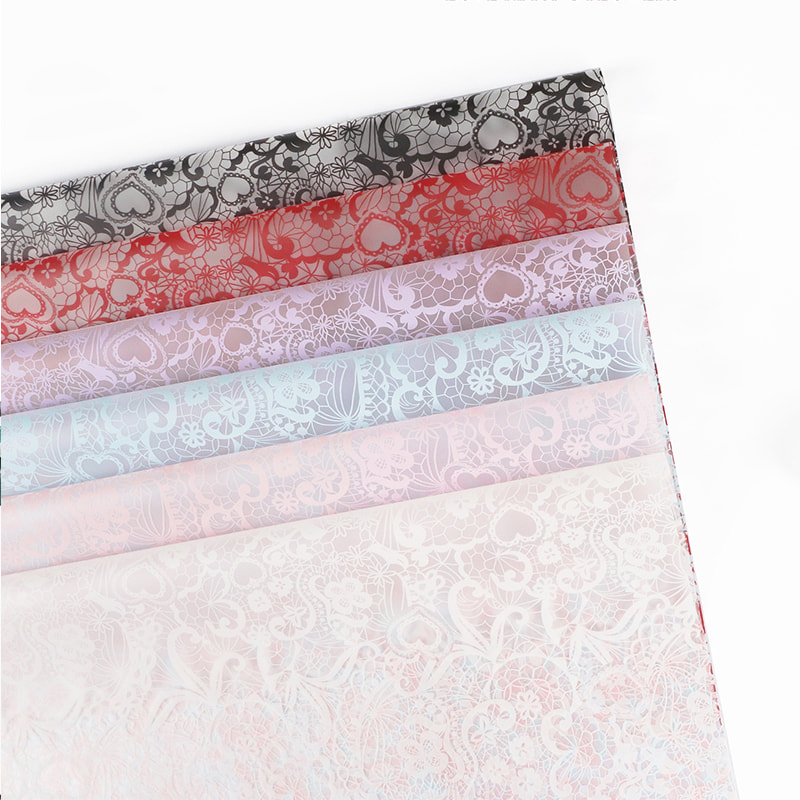 Wholesale 100% Waterproof 6-color flower packaging film Factory, Suppliers - JiaJiangxi Lixuan new material Technology Co., Ltd is China wholesale 100% Waterproof 6-color flower packaging film suppliers and factory,10...View Product →
For a transparent option, waterproof transparent crystal glass flower wrapping paper looks like delicate glassine but is actually a fully waterproof film. It works well as an outer layer that shows off the flowers while protecting the inner paper. Many florists use it as a finishing wrap over kraft or tissue to combine style with performance.
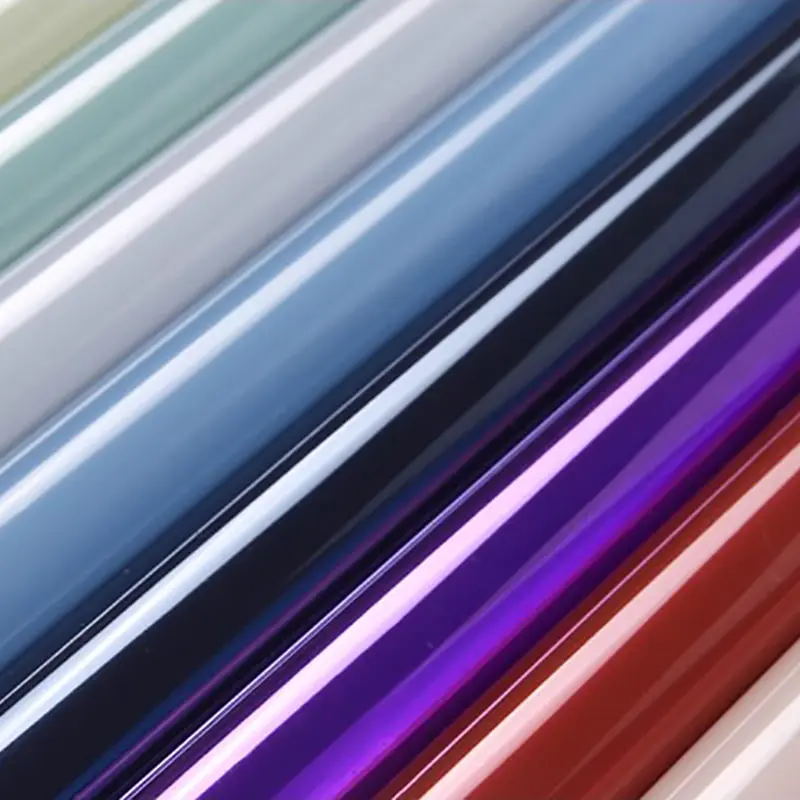 Wholesale Waterproof Transparent Crystal Glass Flower Wrapping Paper Factory, SuJiangxi Lixuan new material Technology Co., Ltd is China wholesale Waterproof Transparent Crystal Glass Flower Wrapping Paper suppliers a...View Product →
The point is not to insist that every bouquet must be wrapped in plastic. The point is to recognize that moisture protection is a genuine engineering requirement, not an aesthetic choice. If your selected paper can handle moisture on its own, you may not need an additional barrier. If it cannot, either add a barrier or accept that the bouquet has a limited lifespan and must be handed over quickly.
Matching Paper to Occasion and Style
Choosing between gift wrap and flower wrap is also a question of style. The occasion, the flower variety, and the intended mood all influence which paper looks right.
For a casual hand-tied bunch of wildflowers, a sheet of brown kraft paper and a piece of twine looks effortless and charming. It signals that the bouquet was made with care, not mass-produced. The same bouquet wrapped in glossy metallic gift wrap would look jarring. Context matters.
For a formal wedding bouquet, a matte paper with a subtle gold edge or a soft pearlized finish creates a more refined impression. These papers have a quiet elegance that complements restrained, monochromatic flower palettes. Pearlized films, in particular, reflect light gently and add depth without overpowering the blooms.
For a birthday bouquet delivered to an office, a bright solid color or a cheerful print adds energy. The key is to choose one strong design element and let the rest of the packaging stay simple. A busy printed paper combined with a multicolored ribbon and a large bow will look chaotic.
Neutral tones such as cream, beige, kraft brown, and soft gray let the flowers stand out. Strong colors like red or blue are bolder but risk clashing with the natural hues of the petals. A reliable rule of thumb is to use a neutral paper when the flowers are colorful, and a more expressive paper only when the flowers are monochromatic or muted.
Texture also shapes the impression. Matte papers feel soft and natural. Glossy films feel modern and clean. Textured papers, such as cotton paper or handmade paper, add tactile luxury that is noticeable the moment someone picks up the bouquet. If production volume and budget allow, keep three or four paper types in stock and rotate them according to the order type. If you need a systematic framework for these decisions, our guide to choosing flower wrapping paper for every occasion breaks down the options by event, flower color, and season.
DIY Versus Professional: Where the Line Falls
The boundary between "good enough" and "professional" in flower wrapping comes down to consistency and durability, not creativity. A home user can absolutely wrap a beautiful bouquet in gift wrap for a friend's birthday. The bouquet needs to survive one short journey, and it will be handed over in person within minutes of wrapping. Under those conditions, the limitations of gift wrap rarely surface.
Commercial floristry is a different environment. A florist preparing fifty bouquets for Valentine's Day cannot afford to have paper tear or leak on any one of them. The cost of a failed bouquet is not just the paper. It is the flower, the labor, the delivery time, and the customer's trust. At scale, consistency becomes the most valuable property of a wrapping material.
Professional flower wrapping materials are engineered around the working conditions of a florist. Standard sheet sizes such as 57 by 57 centimeters match the proportions of typical bouquets. Films and papers are selected for wet strength, tear resistance, and print stability. Coatings are applied to prevent condensation, and some films are treated to resist fogging in cold-chain transport. These are not marketing features. They are functional specifications derived from how bouquets are actually handled.
The price difference between gift wrap and purpose-made flower wrap is modest, usually a few cents per sheet in wholesale quantities. That small difference buys a noticeable improvement in reliability. For a home user wrapping a bouquet a few times a year, gift wrap is acceptable. For anyone selling flowers, the professional route is worth the expense because it reduces waste and customer complaints.
There is also a middle path. Many florists combine inexpensive kraft or butcher paper with a thin inner film barrier and a decorative outer layer of gift wrap. This hybrid approach allows creative freedom while maintaining the protection that commercial use requires. It is a practical strategy for small shops that want distinctive packaging without compromising reliability.
The Final Takeaway
Can you use wrapping paper for a flower bouquet? Yes, provided you respect the physical requirements of the flowers and the limits of the paper. Choose a paper with sufficient weight and tear strength, such as kraft or butcher paper. Avoid glossy, foiled, or very thin papers. Add a moisture barrier around the stems whenever the paper is not waterproof. Use soft gathers rather than sharp creases, and keep the bouquet secured with a rubber band or floral tape before wrapping.
For occasional home use, standard wrapping paper is perfectly adequate. For anyone who wraps flowers regularly for sale or delivery, purpose-made flower wrapping paper is worth the small additional cost, because it eliminates the most common failure modes: moisture damage, tearing at the folds, condensation, and visual clashes.
The best approach is to treat the question as a design and engineering problem rather than a simple yes or no. When the paper, the stems, and the environment are aligned, any decent wrapping will look good. When they are not aligned, even expensive paper will fail. Understanding that alignment is what makes a bouquet wrapper successful, whether it comes from a gift shop or a floristry supplier.
 +86-18270363850
