 English
 русский
 عربى
عربى


add: North of Gaoxin North Road, east of Jinyun Road, Wannian High-tech Zone, Shangrao City, Jiangxi Province
Wrapping flowers in kraft paper is faster than most people expect. Once you learn the diagonal fold method, a single sheet of kraft paper can produce a clean, gift-ready bouquet in under four minutes. The technique is straightforward: cut a square or rectangular sheet, fold it at a slight angle, place the flowers at the top center, fold the sides inward around the stems, gather the bottom, and tie it with twine or ribbon. The result is a natural conical wrapper that holds the stems firmly while leaving the blooms visible from every angle.
The reason this method matters for a flower shop is operational efficiency. Every bouquet that needs to be re-wrapped costs two to four minutes of labor, and at the pace of a busy weekday counter, those minutes add up across dozens of orders. Kraft paper also has a visual language that customers already recognize. Its matte, organic texture signals handcrafted quality and makes the flowers themselves the focal point. A clean paper wrap reduces the need for expensive decorative elements, which keeps both materials cost and labor cost under control.
This guide covers the complete process from selecting the paper to tying the final knot. It also explains the four folding methods that work best for different bouquet types, the technical specifications to check when buying kraft paper in bulk, and the most common mistakes that cause paper waste in commercial settings.
Why Kraft Paper Is a Smart Choice for Flower Wrapping
Kraft paper has become the default wrapping material for artisanal bouquets, and the reasons are practical as much as aesthetic. It is a fibrous paper with a matte surface that does not compete with the flowers. The texture feels hand-touched rather than mass-produced, which is a significant advantage when the wrapping is part of the customer's gift experience. Customers often photograph the bouquet before giving it, and the wrapping appears in those photos. Kraft paper frames the flowers without dominating them.
Eco-Friendly Credentials
The core appeal of kraft paper is environmental. It is made from wood pulp through a process that leaves the natural lignin in the fibers, which gives the paper its characteristic brown color. Because it is unbleached, it fits within a low-impact production model. In practical terms, uncoated kraft paper is recyclable with mixed paper and compostable in a home composting system. That claim becomes harder to maintain when a plastic coating is added, so if you use a coated kraft film, check whether the supplier has documented the material composition for your own waste management plan. If your customers ask about packaging, many will accept a recyclable paper wrap and a separate plastic wrap only when a flower needs moisture protection during transport.
Versatile and Rustic Aesthetics
Kraft paper is not tied to one style. The classic brown look works with Scandinavian minimalism, farmhouse arrangements, vintage romantic bouquets, and modern boutique concepts. Printed kraft paper expands the range further. Newspaper-style prints, English letters, floral line drawings, and gradient colors are all available as stock designs. This range makes kraft paper a suitable choice whether you are selling a single rose at a farmer's market or building a large premium bouquet for a wedding.
Cost-Effective and Low Waste
On a cost per bouquet basis, kraft paper is one of the least expensive wrapping materials. A single sheet costs a fraction of a specialized flower wrap film, and the offcuts from larger sheets can be reused for small stems, tags, or padding. Because kraft paper does not require adhesive tape to hold its shape, you also save on small consumables. Over a week, the savings from using one 57-by-57-centimeter sheet per standard bouquet instead of a larger custom film are meaningful for any shop that packages daily.
Customizable with Branding
Kraft paper takes ink printing, foil stamping, and embossing well. This makes it practical for adding a logo, a care instruction, or a seasonal greeting directly on the wrap. Flower subscription services and boutique shops often use custom printed kraft as part of their identity. If you are not ready for a full custom order, stock printed kraft designs create a bespoke impression without a design cost. The paper can also carry a simple tag or sticker that reinforces the shop's name.
What You Need Before You Start
The wrapping process requires only a few tools, but the quality of those tools determines how fast and how consistent the final result is. A cutting mat, a sharp blade or scissors, and a flat work surface are more important than any decorative accessory. In a busy flower shop, an oversized table and a set of pre-cut paper sheets keep the workflow moving smoothly through a rush of orders.
Materials List
| Material | Purpose | Typical Specifications |
|---|---|---|
| Kraft paper | Outer wrap and structural support | 45 to 60 cm squares, 30 to 60 gsm, single or double side print |
| Flowers | Main subject of the wrap | Stems trimmed, lower foliage removed |
| Scissors | Cutting paper and trimming stems | Floral shears for stems, paper scissors for wrapping |
| Twine or ribbon | Secures the wrap and finishes the look | Jute twine, satin ribbon, or silk ribbon |
| Water source | Keeps flowers hydrated | Water tubes or wet wrap for transport |
| Logo sticker or tag | Adds brand identity | Adhesive label, hang tag, or printed band |
In almost every shop, the core combination is kraft paper, floral shears, and a roll of twine. Jute twine is the most natural match for kraft paper because its coarse, brown texture echoes the paper surface. Satin and silk ribbons are used when the bouquet is meant for a premium gift presentation, such as a wedding or anniversary. The tie needs to hold the paper in place without crushing the stems, so a twine with some elasticity or a ribbon that can be tied with a soft knot is preferable.
When you buy kraft paper for wholesale, the two most important specifications are sheet size and grammage. A 57-by-57-centimeter sheet is the standard for medium bouquets and covers a typical hand-tied arrangement with 15 to 20 stems. A 58-by-58-centimeter sheet provides slightly more working space for double-layer wraps. A 45-by-50-centimeter sheet is designed for smaller posies and single-stem presentations. Grammage, measured in grams per square meter, affects the stiffness and the way the paper folds. A 35 to 45 gsm sheet is pliable and good for tight folds. A 50 to 60 gsm sheet holds its shape better, looks more premium, and resists sagging when the bouquet is heavy.
Kraft Paper, Kraft Film, and Printed Kraft
The term kraft paper is used loosely in the floral industry. Strictly, kraft paper is the fibrous paper produced by the kraft pulping process, which leaves the material strong and structurally resilient. Many modern suppliers add a thin plastic layer, such as BOPP or OPP, on one or both sides. This coating makes the paper waterproof and allows high-quality full-color printing. The resulting hybrid material is often listed as kraft film or kraft wrapping paper in product catalogs. A typical catalog description might say "single-sided pattern aluminum-plated cowhide flower packaging film," which indicates a kraft film with a reflective aluminum layer on one side and a natural kraft look on the other.
For a purely natural appearance, you want uncoated or lightly coated kraft paper. For bouquets that will be stored in a cooler or transported long distances, a waterproof coated kraft film is the safer choice. The waterproof layer prevents condensation from warping the paper, and it stops ink from running on printed designs. It also makes the wrap more resistant to the small amounts of water that can drip from freshly cut stems. Your choice here depends on whether the bouquet is produced for immediate sale or for delivery.
The size of the sheet is not random. The 57-by-57 square is calculated to cover a standard bouquet with a natural overhang, while the 45-by-50 rectangle is designed for smaller arrangements. A larger sheet does not always produce a better wrap. If the paper is too wide, the excess folds in the back can become bulky and pull the bouquet off-balance. If the paper is too small, the flower heads get crushed against the top edge. Measure the diameter of your flower bunch and choose a sheet that is about 15 to 20 percent wider than that measurement.
- Uncoated kraft paper: matte and pliable, fully recyclable. Best for dry or short-lived bouquets sold quickly.
- Waterproof kraft film: resists condensation and water drips. Best for coolers and long transport routes.
- Printed kraft: newspaper, English type, or gradient designs. Best for branding and style differentiation.
- Aluminum-plated kraft: reflective decorative layer on one side. Best for evening events and premium retail windows. A common choice is a single-sided pattern aluminum-plated kraft film
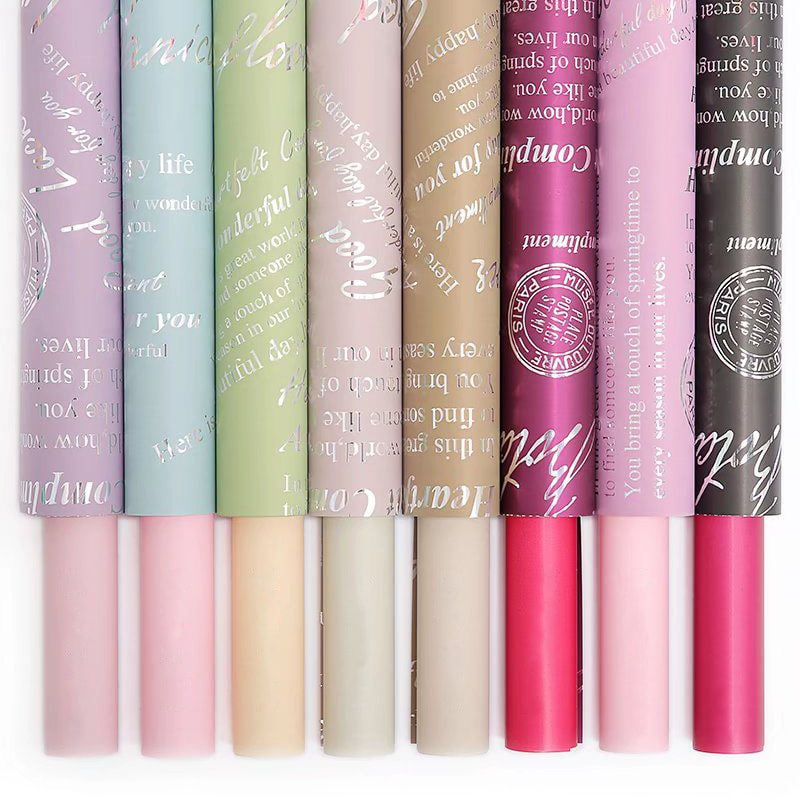 MYHC-19 Single-Sided Pattern Aluminum-Plated Cowhide Flower Packaging FilmThis packaging film features a pearlescent BOPP aluminum coating that adds a reflective sheen, enhancing bouquet visual appeal. Its single-sided pattern offers a modern style, making it suitable for premium presentations where light reflection adds elegance.View Product →.
When you evaluate a supplier, ask for a sample set and test the paper in your actual conditions. Check whether the sheet size is exactly as described, whether the coating is even, and whether printed designs are aligned consistently from sheet to sheet. These details matter more than the product name.
The Core Technique: Step-by-Step Instructions
The diagonal fold method is the most versatile way to wrap flowers in kraft paper. It produces a clean funnel shape that works for almost any bouquet, and it can be adapted for one, two, or three layers of paper. The steps below describe the basic method with a single sheet. Once you master this, you can adjust the paper size and folding angle to suit different bouquets.
The Diagonal Fold Method
- Cut the paper. Start with a sheet that is roughly twice the width of the flower head and about 20 percent taller than the stem length you want to leave exposed. For a standard mixed bouquet, a 57-by-57-centimeter sheet is a safe starting point. Place the paper on a flat table with one corner pointing toward you.
- Fold the paper in half diagonally. Take the top corner and fold it down to meet the bottom corner, but do not align the edges exactly. Shift the fold slightly so that the two halves are not perfectly symmetrical. This offset creates a subtle layered edge that makes the wrap look more intentional and hides the fold line behind the paper.
- Position the flowers. Lay the bouquet on top of the folded paper, just below the center fold line. The flower heads should extend past the top edge of the paper so that they remain fully visible. The stems should point toward the closed corner of the fold. Make sure the stems are held parallel to each other, with no crossing angles, so that the finished wrap stays symmetrical.
- Fold the left side over. Take the left edge of the paper and fold it over the stems, pulling it snugly. The paper should wrap around the stems at the point where the flower heads meet the foliage. Then fold the right edge over in the same way, overlapping the left side slightly in the middle. The overlap should feel tight but should not crush the stems.
- Gather the paper at the bottom. Lift the bottom of the paper and squeeze it inward so that it wraps tightly around the stems. This creates the funnel shape. Use your dominant hand to hold the gathered paper in place while using your other hand to smooth out any large creases. The gather point should be about one-third of the way down the exposed stems, just below the flower heads.
- Secure the wrap. Wrap twine around the gathered section two or three times, then tie a knot and trim the excess. The twine should sit slightly below the flower heads and should be snug enough to hold the paper without leaving a mark on the stems. A double knot is more reliable than a simple bow if the bouquet will be handled.
- Adjust and finish. Gently pull the flower heads upward if they have shifted, and tuck any loose paper corners inward. The wrap should look like a cone with the flowers projecting out of the top and the stems visible below the twine. Check that the front of the paper is smooth and that no print or pattern is upside down.
Why this method works so consistently comes down to the properties of folded kraft paper. The crease from the diagonal fold creates a structural line, and when the paper is pressed into a cone around the stems, the natural spring-back holds the stems in place without tape. A 50 to 60 gsm kraft paper keeps the cone shape better than a very thin 30 gsm sheet, which tends to sag at the bottom. The paper also has enough friction to stay in place while you tie the twine, which is not always true of glossy plastic films.
The Double-Layer Wrap
For a more elaborate presentation, use two sheets of paper. The outer sheet should be a kraft paper or kraft film with a distinct print, while the inner sheet can be a plain solid color or a subtle texture. The process is the same as the diagonal fold method, but instead of placing the bouquet onto a single folded sheet, you place the bouquet onto one sheet and then place a second pre-folded sheet behind it before folding the sides. The result is a layered wrap where the inner sheet peeks out from under the outer sheet at the top and sides.
The double-layer wrap is common in shops that photograph their bouquets for social media. It looks more elaborate from the moment the customer receives it, and it hides small imperfections in the inner layer. The extra sheet also adds weight and thickness, which makes the bouquet feel more substantial in the customer's hand. This is a subtle quality cue that is often worth the additional material cost.
The Fan Method
The fan method is an alternative that works well for bouquets with a very wide arrangement of flower heads, such as a large mixed bunch. Instead of folding the paper in half, you place the bouquet at one corner of an unfolded square and fold the paper up and around the stems in a fan-like motion. The paper is gathered at the bottom, then tied with twine, and the top corners are separated to create a fan that spreads out behind the flowers. This produces a one-sided presentation, which is ideal for events, photo shoots, and display cases where the bouquet is viewed from the front.
The Pocket Wrap
The pocket wrap is designed for small arrangements such as single roses, ranunculus, or a few stems of eucalyptus. It uses a narrow rectangular sheet that is folded in half lengthwise, creating a pocket for the stems. The stems slide into the pocket, and the paper is gathered at the bottom and tied. The pocket wrap is a quick solution for small gifts and works well with a branded sticker on the front. It uses less paper, which reduces waste in a shop that sends out many small bouquets.
For each method, the key is to keep the stems parallel and pointed downward. This prevents the flowers from sliding around inside the wrap and makes the final assembly easy to handle. When you are first learning the technique, practice with paper that has a visible crease mark so you can track where the folds form. For additional variations and layout examples, you can also read our full DIY flower wrapping guide, which explains the same methods with more visual detail.
Adapting the Technique to Different Bouquet Types
Every bouquet has a different shape and weight, and the wrap must adapt accordingly. The same 57-by-57-centimeter sheet that works for a medium bouquet can be cut down for a single stem or combined with a second sheet for a large arrangement. The table below summarizes the paper size and folding approach for common bouquet categories.
| Bouquet Type | Recommended Paper Size | Fold Style | Fastening |
|---|---|---|---|
| Single rose | 30 x 40 cm | Pocket wrap | Twine or small sticker |
| Small hand-tied posy | 45 x 50 cm | Diagonal fold | Jute twine |
| Standard mixed bouquet | 57 x 57 cm | Diagonal fold, single layer | Twine or ribbon |
| Large premium arrangement | 58 x 58 cm, two sheets | Double-layer diagonal fold | Wide satin ribbon |
| Long-stemmed roses | 60 x 60 cm | Fan or diagonal fold | Twine, no ribbon |
Single-Stem Flowers and Small Posies
Small arrangements need a tighter wrap and less paper. A 30-by-40-centimeter sheet is enough for a single rose, with the bottom folded up to create a neat pocket. For two or three stems, a 45-by-50-centimeter sheet is a better fit. Twin the wrap tightly so that the stems stay parallel, and leave enough paper below the twine to give the bottom a tapered look. A small wrap also benefits from a single decorative sticker or a thin ribbon rather than heavy twine, because the visual space is limited.
Large Mixed Bouquets
Large mixed bouquets need a bigger sheet or two sheets. If the flower heads are wide, the fan method produces a more open, spread-out look. If the stems are numerous and lush, the diagonal fold with a double-layer wrap keeps the shape compact and even. The most common mistake with large bouquets is using paper that is too small. This creates a narrow top opening that crushes the flower heads and makes the bouquet look squeezed. A good rule of thumb is to measure the diameter of the flower head bunch and add 15 to 20 percent for the paper width.
Long-Stemmed Roses
Long-stemmed roses are the easiest to wrap because the stems provide a clear line to follow. Use a large sheet, fold it diagonally, and position the rose heads just above the top edge of the paper. When you gather the bottom, hold the stems tightly and allow the paper to follow the natural taper of the bunch. The wrap should end just below the flower heads, about 20 to 25 centimeters from the bottom of the stems. Long stems also give you room to use a waterproof kraft film, since the paper is more likely to come into contact with moisture from the stems during transport.
Bouquets with Heavy Foliage
Foliage such as eucalyptus, fern, or monstera leaves adds weight and width to the lower part of a bouquet. When these are present, the gather point needs to be placed higher on the stems so that the foliage does not get crushed inside the paper. Use a double-layer wrap for extra support, and tie with a ribbon rather than twine if the foliage needs more room. A taller sheet, such as 58 by 58 or 60 by 60, gives the stems enough space to spread naturally.
Choosing the Right Kraft Paper Finish for Your Bouquets
The look of a wrapped bouquet is determined by the paper finish. Kraft paper is available in matte, glossy, coated, and metallic variations. Each one behaves differently when folded, prints differently, and delivers a different visual impression. The right choice depends on the bouquet type, the occasion, and the brand image of the flower shop.
Matte Kraft Paper
Matte kraft paper is the classic choice. It has a dry, fibrous surface that absorbs light rather than reflecting it, which gives the bouquet a soft, organic appearance. It is also the easiest to fold because the paper does not slide against itself. For a rustic farmhouse bouquet or a minimalist home delivery, matte kraft is the safest option. It also prints well with a simple logo or a small tag, and it holds a crease without cracking.
Glossy and Coated Kraft Film
Coated kraft film has a thin layer of OPP or BOPP on one side, which makes the surface slightly reflective. The coating also seals the paper against moisture, which is a major advantage for bouquets that will be displayed in a refrigerator or transported in a cooler. The water barrier prevents the paper from becoming soft and prevents printed ink from smudging when condensation forms. For wholesalers and event florists, this is often the reason to move from plain kraft paper to coated kraft film.
Printed and Patterned Kraft
Printed kraft paper makes it easy to set a shop apart without ordering a fully custom design. Newspaper-style prints, English lettering, floral line drawings, and gradient colors are all available as stock designs. These papers wrap the same way as plain kraft, but the final presentation is much more distinctive. A popular option is the retro newspaper style kraft wrapping paper, which has an instantly recognizable vintage character and pairs well with jute twine or a simple ribbon.
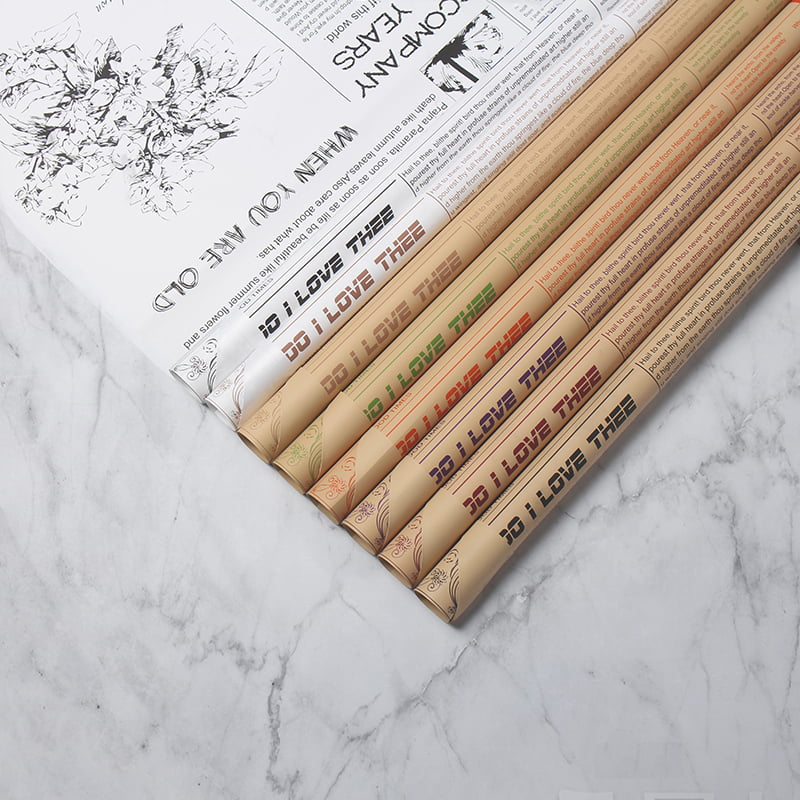 MYHC-21 Retro Newspaper Style Cowhide Flowers Wrapping PaperThis kraft paper features a vintage newspaper print that gives bouquets a nostalgic character. It is ideal for florists seeking a distinctive and artistic look, pairing well with twine for a charming, personalized presentation.View Product →
Metallic and Aluminum-Plated Kraft
Aluminum-plated kraft film uses a thin metallic layer that adds a reflective sheen to one side of the paper. The metallic surface can be silver or gold-tinted, and it is often paired with printed patterns or edge borders. This finish is ideal for evening gifts, weddings, and premium retail bouquets where the wrap needs to catch the light. A single-sided pattern aluminum-plated kraft film combines the decorative outer layer with the natural kraft texture on the inside, so the bouquet looks polished while still feeling organic.
MYHC-19 Single-Sided Pattern Aluminum-Plated Cowhide Flower Packaging FilmThis packaging film features a pearlescent BOPP aluminum coating that adds a reflective sheen, enhancing bouquet visual appeal. Its single-sided pattern offers a modern style, making it suitable for premium presentations where light reflection adds elegance.View Product →Branding and Customization: Making Kraft Wrap Your Signature
For any flower shop or subscription service, the wrapping is a tangible brand asset. Customers see it before they see the flowers, and they often reuse the paper in photos or as a gift wrapper. Kraft paper offers several simple ways to add branding without a large minimum order.
Color Coordination with the Kraft Base
Kraft paper naturally comes in brown tones, but it also takes color well. A low-saturated kraft paper in muted shades provides a modern, understated look. This is a useful canvas for a brand color, because a muted base keeps the focus on the flowers. White ink printing or silver foil logos stand out clearly on this paper, and the reduced chance of color clashing makes it easier to maintain a consistent identity across many bouquets.
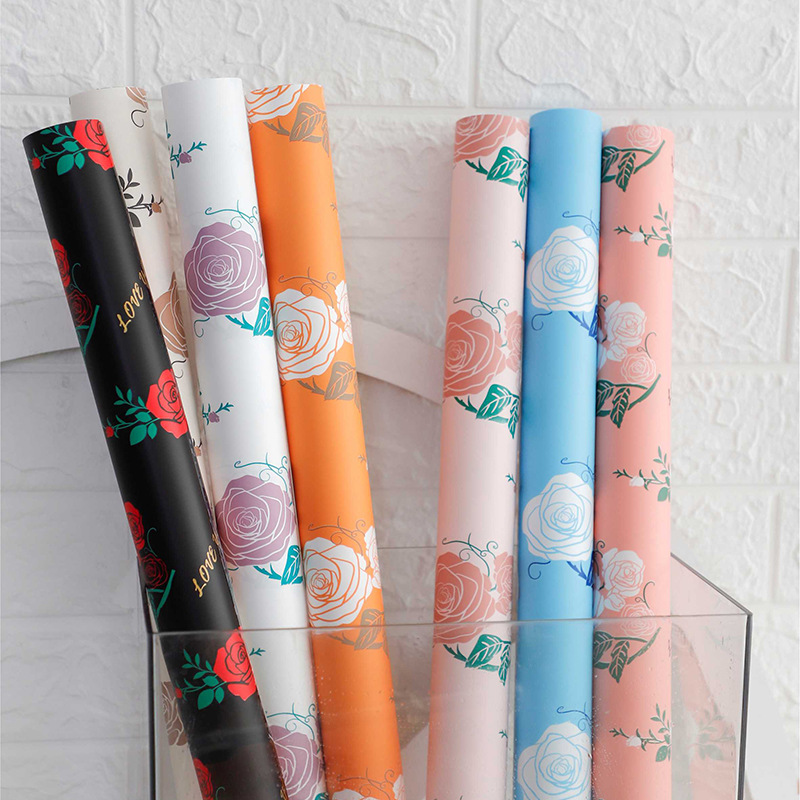 MYHC-47 Low-Saturated Cowhide Flower Wrapping PaperThis paper offers a muted, low-saturation kraft base that serves as a refined canvas for branding. Its durable structure withstands folding and stretching, making it reliable for everyday wrapping while allowing easy coordination with colored accessories.View Product →
If your shop uses one signature color, a neutral kraft wrapper with a colored sticker or ribbon ties everything together. This approach keeps the wrap consistent without having to order custom-printed paper for every small run. It also allows you to switch ribbons for seasonal promotions while keeping the same base paper.
Adding a Logo or Sticker
A simple circle sticker or a wrap-around label can turn a plain kraft wrap into a branded package. Place the sticker near the point where the twine is tied, or slightly below the flower heads on the front of the wrap. If you ship flowers, a sticker that shows the brand name on the front and care instructions on the back is practical and professional. For a more permanent branding solution, many suppliers can apply a printed logo directly onto the kraft sheet during production.
Coordinating Ribbon and Twine
The tie is the finishing detail. Jute twine gives a rustic look, while silk ribbon makes the same wrap feel luxurious. Many florists use a two-tone combination: a coarse twine for the structure and a thin ribbon for the decorative touch. The ribbon color can echo the paper pattern or the flower's dominant color, creating a cohesive composition. The tie should be tight enough to hold the paper but loose enough to avoid crushing the stems. A bow on the front also gives the customer a visual cue about where to untie the wrap.
Consistency Across Orders
Customers often decide whether to return to a flower shop based on how consistent the product looks. A wrapping standard operating procedure that specifies the paper size, fold direction, gather height, and tie placement makes the entire team produce the same result. This consistency is one of the most valuable effects of using kraft paper: it is a standard material, so any employee can learn the method and repeat it reliably.
Common Mistakes in Kraft Wrapping and How to Fix Them
Even experienced florists run into issues with kraft wrapping from time to time. The most common problems are related to paper size, stem alignment, and the tightness of the gather. These mistakes waste both time and material, which is why the table below is useful as a quick reference for new staff.
| Mistake | Why It Happens | How to Fix It |
|---|---|---|
| Paper tears at the bottom | Pulling too hard on the gathered section, or using paper with a rough surface | Use a heavier 50 gsm paper, or gather the paper slowly without sharp pulls |
| Flower heads are hidden | Flowers placed too far down on the paper, or the top fold is too high | Move the bouquet up so the heads clear the paper edge by 2 to 3 cm |
| Stems poke through the paper | Stem tips are angled outward or the paper is too small | Hold stems parallel and use paper at least 20 cm longer than the visible stem length |
| The wrap is too loose | Paper is folded without a snug gather around the stems | Pull the paper tightly at the stem point and keep one hand on the gather while tying |
| Uneven top edge | Fold not aligned consistently | Use a cutting mat to measure the diagonal fold and practice with the same sheet size |
| Wrinkles across the front | Pressing the paper down too hard while folding | Use a lighter touch, or fold the paper before placing the bouquet inside |
Planning ahead saves the most material. Cut all paper sheets to the same size before the busy morning shift. If you sell standard and premium bouquets, have two sizes ready. When you use printed paper, do a test wrap with a few stems to check that the pattern faces the right direction and that the print does not end up on the wrong side. A printed sheet with an upside-down logo is a waste of both paper and time.
Another common issue is inconsistency between two employees wrapping the same bouquet type. The easiest fix is a written standard operating procedure that specifies the sheet size, fold direction, gather height, and tie placement. This document helps new staff learn quickly and ensures that every customer receives the same look. It also makes it easier to train a temporary employee during a holiday rush.
Finally, if you work with a supplier that sells pre-cut kraft sheets, ask for the exact dimensions and tolerances. A small variation in sheet size can change the way the wrap looks, especially when you use a double-layer wrap. If the sheets are not consistently cut, the top edge of the paper will appear uneven from one bouquet to the next.
Commercial Buying Guide: What to Look For in Bulk Kraft Paper
When you buy kraft wrapping paper for a florist shop, wholesale distribution, or event company, the decision is not just about aesthetics. It involves cost per unit, sheet consistency, print quality, delivery time, and the reliability of the supplier. The following considerations are practical and apply to any scale of operation.
Sheet Size and Roll Options
Florists usually buy pre-cut sheets because they save labor and guarantee consistency. Pre-cut sheets are also easier to store on a shelf or in a drawer. If you use very high volumes, a roll of kraft paper can be cheaper per square meter, but you need cutting equipment and training. The most common pre-cut sizes are 57 by 57 centimeters, 58 by 58 centimeters, and 45 by 50 centimeters. A 57-by-57 sheet is a good compromise for most hand-tied bouquets, while the 58-by-58 sheet gives a little more room for double wraps.
Grammage and Stiffness
Grammage, or basis weight, is the key technical parameter. It is measured in grams per square meter, or gsm. For floral wrapping, the practical range is around 30 to 60 gsm, with 35 to 50 gsm being the sweet spot for most shops. A lower grammage is easier to mold around irregular stems, while a higher grammage gives the wrap a substantial, premium feel. A 50 gsm kraft film also holds up better when flowers are wet, because it resists sagging and does not soak through as quickly.
Print Quality and Facing Direction
When you order printed kraft paper, check whether the print is single-sided or double-sided. Single-sided printed paper must be folded so that the print shows outward. For double-sided printed paper, the orientation does not matter, which reduces the risk of errors on a busy counter. For patterned paper, the repeat should be small enough that it looks balanced on a small bouquet. If your shop uses a logo, a simple pattern is better than a large design that hides the flower heads.
Waterproofing and Durability
Waterproof coated kraft film is essential for bouquets that will be stored in a cooler or transported long distances. Condensation forms inside the wrap when flowers respire, and this moisture can cause uncoated paper to warp and ink to bleed. A waterproof coating prevents this without making the paper look plasticky if the coating is applied thinly and matte-laminated. If you deliver flowers on a regular route, waterproof kraft is worth the slightly higher cost. The additional cost is offset by the reduced number of re-wraps caused by damaged paper.
Cost Per Bouquet Calculation
To figure out your actual cost per wrap, divide the price per sheet by the number of bouquets you can wrap with it, then add labor. For example, if a 57-by-57-centimeter sheet costs 0.15 euros and you use one sheet per standard bouquet, the paper cost is 0.15 euros plus about 0.10 euros of labor if wrapping takes two minutes at 3 euros per hour. For premium double-wrapped bouquets, the cost doubles. This calculation helps you decide when to use a more expensive paper with a better print, and when a plain sheet is enough.
Supplier Quality Control
Consistency is the most important supplier trait. Sheets should be identical in size, print alignment, and coating thickness. Before committing to a large order, request samples and perform a simple test: wrap ten bouquets and photograph them from the same angle. Compare the top edge, the gather shape, and the way the pattern falls. If any sheet looks different, the supplier may have loose tension on the printing roll or an uneven cutting process. In the sample process, also check that the paper does not crumble at the edges and that the color does not fade under light.
To review the available options from a specialized manufacturer, you can browse the full kraft flower wrapping paper collection and match the listed dimensions and finishes to your daily workflow.
Kraft Paper and Sustainable Flower Packaging
Sustainability has moved from a marketing angle to a purchasing criterion. Many flower shops now advertise their packaging as recyclable or compostable, and kraft paper has become one of the materials that supports that claim. The key point is to distinguish between kraft paper, coated kraft paper, and kraft film, because their recycling paths are different.
Uncoated kraft paper is generally compostable and recyclable with other paper. Coated kraft paper with a thin plastic layer is not paper-recyclable in most municipal streams, but it is usually accepted by specialized industrial facilities that can separate the plastic from the fiber. Kraft film with a thick BOPP layer is best treated as plastic packaging. If your working station separates waste, the two types should not be mixed, because one paper batch contaminated with plastic film can lower the quality of the whole recycling load.
There is also a practical volume aspect to sustainability. Buying the right paper size reduces offcuts and therefore reduces waste. A sheet that is 57 by 57 centimeters produces less scrap for a standard bouquet than a 60 by 60 sheet, even though the larger sheet may seem like a safer choice. Measuring your average bouquet diameter and using that as the basis for paper size is the most direct way to cut waste.
Finally, check whether the supplier states the environmental impact of the paper. A credible supplier should be able to explain the raw material origin, the coating method, and whether the product is designed for recycling. If the supplier cannot provide this information, it is worth asking about it, because your customers may ask the same question. In a commercial setting, the environmental claim should also be backed by a clear internal policy for how your shop handles paper offcuts and packaging waste.
The broader trend is toward responsible packaging. Recycled kraft paper, water-based coatings, and source-separated waste streams are becoming more common in the flower industry. If you choose a kraft film that is waterproof, ask about the recycling classifications and whether the coating is suitable for industrial composting. The answer will determine what you can honestly tell your customers about the packaging they receive.
Kraft paper wrapping is a skill that pays off quickly. The diagonal fold method can be learned in one afternoon, and the double-layer, fan, and pocket variations give you enough range to handle every bouquet you will face in a retail flower shop. The core steps are simple: measure the bouquet, choose a sheet that gives you about 20 percent extra width, fold at a slight diagonal, place the flowers with the heads above the paper edge, gather the bottom tightly, and tie with twine. This process keeps the stems aligned, protects the flower heads, and produces a clean, gift-ready cone in a few minutes.
When you buy kraft paper for your business, prioritize sheet consistency, grammage, and the coating type that fits your transport and storage conditions. Printed and aluminum-plated kraft films add visual impact without changing the wrapping technique, and they let a single style of paper serve both daily orders and premium presentations. A waterproof film extends the shelf life of the wrap and reduces the number of returns caused by damaged packaging.
The final advantage of kraft paper is forgiveness. Small creases, slight misalignments, and tiny tears can be tucked into the gather or covered by the twine. This makes it a practical choice for a busy shop, and it is a big reason why so many florists choose kraft paper in the first place. With a small amount of practice and a reliable supply of the right paper size and finish, kraft wrapping becomes a dependable part of your flower shop's service quality.
 +86-18270363850
