 English
 русский
 عربى



add: North of Gaoxin North Road, east of Jinyun Road, Wannian High-tech Zone, Shangrao City, Jiangxi Province
Picture a florist packing forty mixed bouquets for a Saturday market: the flowers are ready, the ribbon is cut, and the only unresolved decision is the outer wrap. Kraft flower wrapping paper is often the first option reached for because it reads as natural, calm and gift-ready. But the paper that looks right in a sample photo can behave very differently on a busy bench. The practical conclusion is simple: buy kraft wrap by matching the paper base, coating, caliper, sheet size and print finish to the bouquet style and the conditions it will travel through. A 57×57 cm sheet that folds cleanly around a hand-tied bouquet may be too small for a large presentation piece, and an uncoated kraft sheet that feels lovely in dry weather can mark or soften in a cooler display.
What Counts as Kraft Flower Wrapping Paper
Kraft flower wrapping paper is not one material. In florist supply, the term covers natural kraft paper, coated kraft, and kraft-look films made from BOPP or OPP with a brown, beige or printed surface. The distinction matters because the word kraft describes a look and a paper family, not a single performance standard. A natural kraft sheet is breathable and has a dry, fibrous hand. A coated or laminated kraft-look sheet can resist water and hold a crisp fold, but it may trap condensation if used around fresh stems without an inner layer.
| Construction | Feel and look | Moisture behaviour | Typical bouquet use |
|---|---|---|---|
| Natural kraft paper | Dry, fibrous, matte | Breathable but not waterproof | Dried flowers, rustic bunches, dry indoor display |
| Coated kraft paper | Smoother, firmer, fewer surface fibres | Some water resistance; edges still need care | Everyday shop wrap, gift bouquets, short delivery |
| Kraft-look BOPP or OPP film | Crisp, flexible, often waterproof | Resists water and condensation when specified | Fresh bouquets, cooler display, wholesale transport |
| Aluminum-plated or pearlescent kraft film | Reflective, smooth, more decorative | Usually water-resistant; surface can show marks | Gift work, weddings, holiday and premium bouquets |
For buyers, the useful question is not “Is it kraft?” but “Which kraft construction fits this bouquet?” A grocery-store bunch that will sit in a refrigerated case needs different behaviour from a dried-flower arrangement or a wedding bouquet that will be photographed indoors for two hours. The product name, coating description and thickness usually tell you more than the colour alone.
Why Florists Reach for Kraft First
Kraft earns its place for three practical reasons: it photographs without competing with flower colour, it accepts creases and folds well when the paper has enough body, and it gives a bouquet a finished, market-ready look without requiring a seasonal print. Uncoated kraft is also popular for dried flowers and rustic arrangements because its matte surface absorbs light rather than reflecting it. Coated kraft-look films are more common for fresh bouquets that need a water-resistant outer layer, especially in delivery and wholesale work.
The finish changes the message
A clean brown sheet with a narrow ribbon reads as simple and natural. A newspaper-print kraft sheet reads as retro or market-style. A gold-edged or pearlescent kraft film pushes the bouquet toward gifting, weddings or holiday work. These are not minor decorative differences: the finish changes the perceived price band of the bouquet and the type of customer it suits. For a broader comparison of occasion-led choices, see this guide to choosing flower wrapping paper for different occasions.
A retro newspaper-style cowhide sheet, for example, suits casual market bunches and adds a readable texture without a heavy pattern.
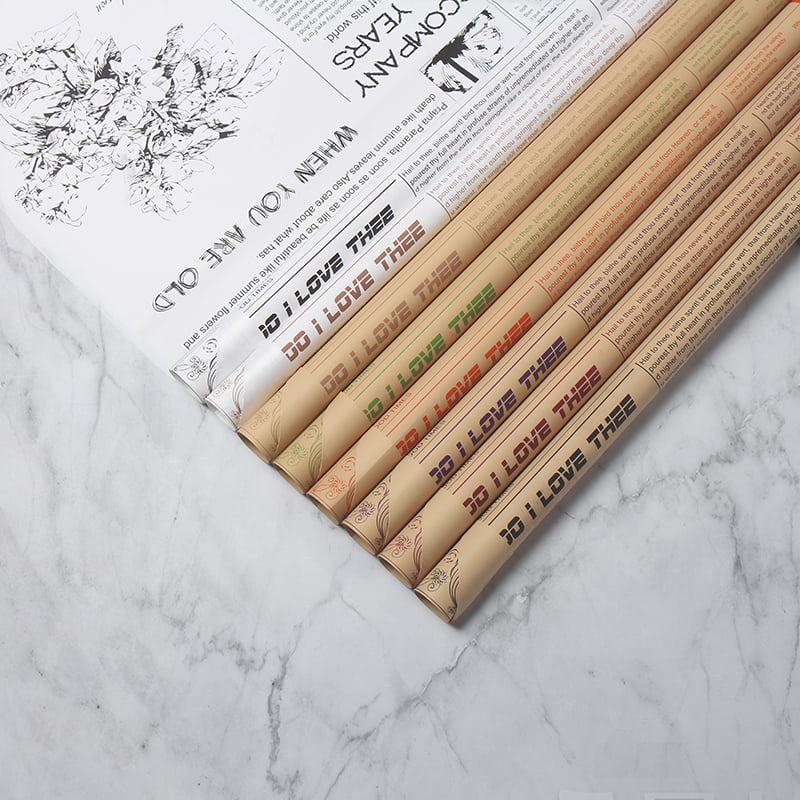 MYHC-21 Retro Newspaper Style Cowhide Flower Wrapping PaperWholesale 57×57 cm cowhide-style floral wrap in pearlescent BOPP film, with a retro newspaper look suited to casual market bunches and everyday bouquet packaging.View Product →
Specs That Matter on the Bench and in Delivery
Most florist wrap is sold in sheets around 57×57 cm, 58×58 cm or 45×50 cm, with thickness described in mil for film-based products and in paper weight or hand-feel for paper-based products. Those numbers are not interchangeable. A 4.5 mil film feels light and folds easily, while a 7.5 mil film has more body and scratch resistance but can be harder to gather into tight pleats. On a busy bench, the difference shows up in how many sheets are wasted per bouquet and how quickly the wrap creases where the stem bundle is tied.
- Sheet size: 57×57 cm is a versatile starting point for medium hand-tied bouquets; larger presentation work may need two sheets or a wider format.
- Fold memory: Paper that cracks along a hard crease will look tired before the bouquet reaches the customer. Test a 90-degree fold on a sample.
- Moisture behaviour: Waterproof and anti-fog films help in coolers and delivery vans, but they need an inner wrap or absorbent layer around fresh stems.
- Ink and surface durability: Printed kraft-look sheets should not rub off on hands, ribbon or light-coloured petals during handling.
- Lot consistency: Brown and beige tones vary between production runs. Ask for a production sample if colour matching matters for a shop’s signature look.
Purchase risk usually sits in the gap between a sample and a full carton. A single sheet may fold beautifully, but a full pack can arrive with curled edges, uneven coating or a print that sits slightly off-register. For wholesale orders, check the carton quantity, sheet count, core size if supplied on a roll, and whether the product is packed flat or folded. Folded storage saves space, but permanent creases can show up in finished bouquets.
A gold-stitched English-decoration cowhide sheet is a useful example of a finish that sits between everyday and gift work.
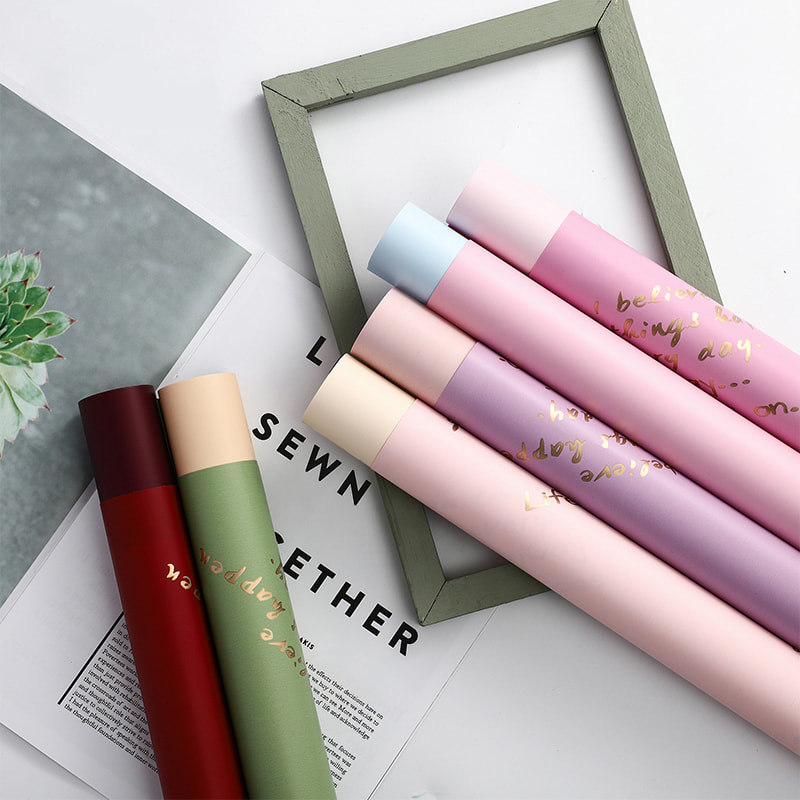 MYHC-26 Gold-Stitched English Decoration Cowhide Wrapping PaperWholesale 57×57 cm cowhide-style floral wrapping paper with single-sided gold-stitched English decoration, offering a finish between everyday and gift bouquet work.View Product →
Print, Finish and the Bouquet Story
Print is where kraft wrapping becomes specific. A monochrome newspaper print suggests a market bunch or a casual thank-you bouquet. English lettering, soft gradients or French-style line work can make a simple wrap feel more considered. Gold edges, aluminum plating and pearlescent film add light reflection, which helps a bouquet stand out under shop lighting but can look out of place in a natural, garden-style arrangement. The safest approach is to keep one or two neutral kraft bases for everyday work and add printed or metallic finishes only where they support the bouquet’s price point and occasion.
The kraft flower wrapping paper range includes plain, printed, aluminum-plated and pearlescent options, so the same supplier can cover different tiers without a complete change of visual language.
For a single-sided newspaper style that keeps the reverse side plain, MYHC41 is a practical example.
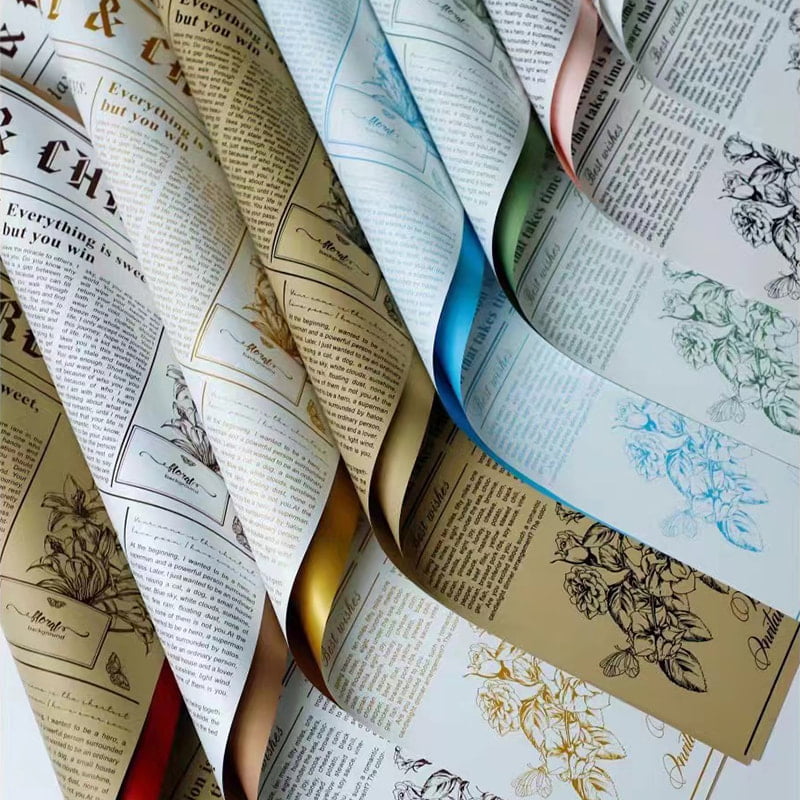 MYHC-41 Single-Sided Newspaper Style Cowhide Wrapping PaperWholesale 57×57 cm floral wrap with a single-sided newspaper-style cowhide design and plain reverse, useful for practical shop trials before buying cartons.View Product →
A Practical Buying Checklist
Before committing to a carton, run a short trial that reflects real shop conditions. The aim is not to find the most attractive sheet in isolation, but the sheet that still looks good after folding, tying, sleeving and a short delivery run.
- Fold a full bouquet, not a flat sample. Check the paper at the stem bundle, the collar and the outer edge.
- Test with wet stems or a water source. Coated paper may resist water, but trapped moisture can still soften uncoated paper or encourage condensation.
- Rub the printed surface with a dry tissue and a slightly damp hand. If colour transfers, the print is not suitable for high-handling work.
- Compare two production lots side by side under daylight. Brown kraft tones can drift warmer or cooler between batches.
- Confirm sheet count and usable size. A nominal 57×57 cm sheet may lose several centimetres after trimming or edge decoration.
- Store samples flat and at stable humidity. Paper that picks up moisture before use can curl, wrinkle or lose stiffness.
For shops that sell both fresh and dried arrangements, keep the two paper types separate. A waterproof film that suits fresh delivery can look too glossy around dried flowers, while an uncoated kraft that suits dried work may water-mark around fresh stems. The buying decision is therefore a workflow decision, not only a colour decision.
Storage, Handling and Waste Considerations
Kraft paper and kraft-look films need different storage. Uncoated paper should stay flat, dry and away from direct sunlight; humidity can make it wavy and cause print to offset. Film-based wraps are more tolerant of short-term moisture but should still be kept away from sharp edges and heavy cartons that can crush the roll or leave hard creases. Rotate stock so older lots are used first, especially when colour consistency matters for a shop’s branded wrap.
Waste is often controlled at the cutting stage. Pre-cutting sheets to the bouquet sizes a shop uses most can reduce offcuts, but it also reduces flexibility for oversized work. A mix of one versatile sheet size and one larger format is usually more practical than stocking many near-duplicate sizes. Where recycling matters, check whether the wrap is plain paper, coated paper or a plastic-film laminate; coated and laminated products may not be accepted in the same paper stream as uncoated kraft.
Kraft flower wrapping paper is a useful default because it is visually flexible, widely available and easy to pair with ribbon, twine and simple labels. The mistake is treating all kraft as the same. Match the construction to the bouquet: natural kraft for breathable, dry-handled work; coated or film-based kraft for delivery and cooler display; printed or metallic finishes for gift and occasion work. When the paper, size and finish are chosen together, the wrap supports the flowers instead of competing with them.
 +86-18270363850

