 English
 русский
 عربى
عربى


add: North of Gaoxin North Road, east of Jinyun Road, Wannian High-tech Zone, Shangrao City, Jiangxi Province
It is five minutes before closing, and a customer walks in with a hand-picked bunch of garden roses. You have a stack of wrapping paper behind the counter, but which fold will make those roses look intentional rather than rushed? The answer is simpler than it seems: professional flower wrapping depends on a small set of reliable folding techniques, not on artistic improvisation. Once you learn how to fold flower wrapping paper the right way, you can produce a crisp, balanced bouquet wrap in under two minutes, every time.
Why the Fold Matters More Than You Think
Folding is not just a decorative step. The creases in wrapping paper create structure. A well-placed fold holds the stems together, keeps the bouquet upright, and prevents the paper from collapsing under the weight of the flowers. A bad fold, on the other hand, can make even premium blooms look messy.
Folding also changes how the paper drapes. A sharp diagonal fold creates a clean cone that supports a large hand-tied bouquet. A soft accordion fold gives a fluttery, romantic silhouette that suits smaller posies. Understanding these mechanics allows you to choose the right fold for the shape and weight of each bouquet, rather than relying on one default method.
What You Need Before You Start
Before you fold, gather the basics: a sheet of flower wrapping paper at least 57 by 57 centimetres, a strip of crepe or paper ribbon, double-sided tape or a stapler, and a clean workspace. Larger sheets give you more room to create depth, while smaller sheets force the paper closer to the stems and are better for compact bouquets.
Paper selection matters as much as the fold. For a soft inner layer that moves easily and accepts a gentle pinch, consider a flexible cotton paper, such as this single-sided polka-dot cotton wrapping paper. It is thin enough to pleat without cracking, yet sturdy enough to support a modest bouquet. If you need more options, browse our full range of flower wrapping films before you start, and match the paper weight to the size of the stems.
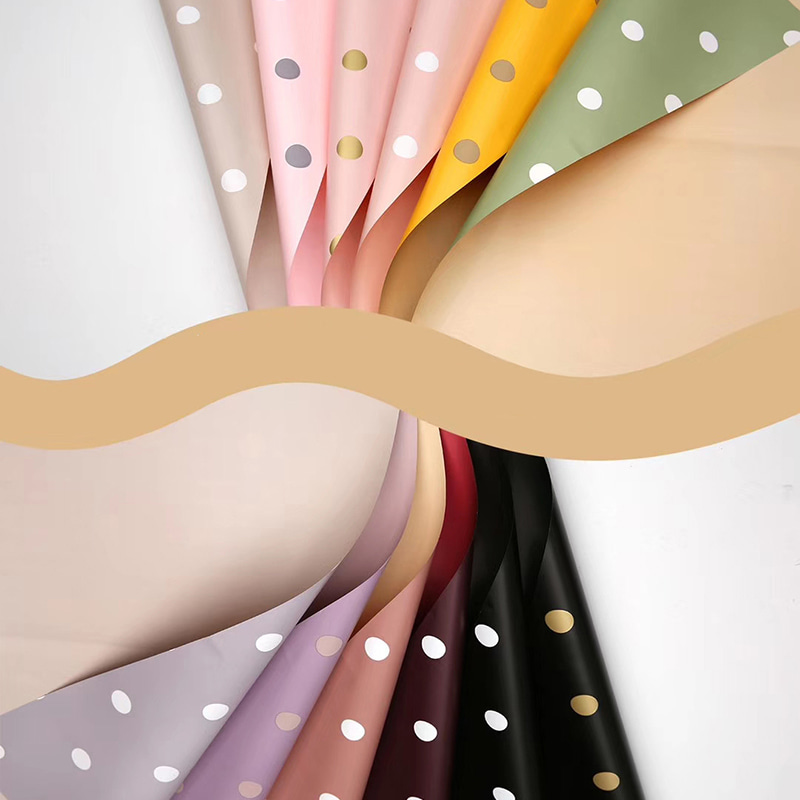 Wholesale MYHC-24 Single-Sided Polka Dot Cotton Flower Wrapping Paper Factory, SJiangxi Lixuan new material Technology Co., Ltd is China wholesale MYHC-24 Single-Sided Polka Dot Cotton Flower Wrapping Paper suppliers ...View Product →
The Basic Diagonal Fold
The diagonal fold is the first technique to master because it suits most hand-tied bouquets sold over the counter. Lay the paper on your work surface as a diamond, with one corner pointing down toward you. Place the bouquet on the diagonal line that runs from the upper corner to the lower corner, keeping the stems aligned with the bottom point.
- Fold the bottom corner up over the stems. Press the paper against the stems firmly so it forms a snug pocket.
- Bring the right corner across the front of the stems, folding at a slight angle to create a diagonal line across the bouquet face.
- Fold the left corner over the right corner, allowing the paper to wrap around the side of the bouquet.
- Tuck the top corner down for a finished edge, then secure the wrap with tape or ribbon just below the flower heads.
The result is a cone-shaped wrap with two visible diagonal seams that guide the eye upward toward the blooms. This fold works best with medium-weight paper that holds a crease, such as kraft or matte film.
The Triangle Fold for a Neat Cone
The triangle fold is the technique featured in many flower shop tutorials, and it produces the crisp "mountain" look seen on studio bouquets. Start with a square sheet and fold it in half from corner to corner to make a triangle. Open the paper slightly so the folded edge stands up like a ridge, then push that ridge backward to create two peaks or "mountains" on the back side of the paper. This subtle pre-fold gives the paper a controlled curve, so it wraps around the stems without sudden bends.
- Lay the paper as a triangle with the long folded edge facing you.
- Fold the bottom edge up by about one inch to reinforce the base of the wrap.
- Place the bouquet in the centre, with the flower heads above the fold.
- Wrap each side of the triangle around the stems, overlapping the two ends in front.
- Tie off with ribbon. The pre-folded mountains will fan out slightly, giving the bouquet an elegant, three-dimensional silhouette.
This method is especially effective for round bouquets that need a more open, gathered look. The extra fold at the base also supports the stems and prevents the paper from slipping over time.
How to Fold Wrapping Paper Around a Posy
Smaller bouquets, such as bridal posies or bud vases that need a quick wrap, call for a different folding logic. Here, the paper completely surrounds the flowers rather than forming a single-front cone. You will need two identical sheets, or one sheet cut in half, to create a symmetrical envelope.
- Place the posy in the centre of one sheet. Fold the left and right edges toward the centre, overlapping them in front of the stems.
- Pinch the paper just below the flower heads to create soft gathers on each side.
- Take the second sheet and rotate it 90 degrees. Wrap it around the front of the posy, leaving the blooms visible.
- Fold the bottom edge upward to cover any exposed stem tape, and secure both sheets together at the "waist" of the bouquet.
This layered wrap works well with soft cotton paper or thin film because these materials gather into pleats without adding too much bulk at the pinch point.
Adjusting Your Fold for Different Paper Types
Not all wrapping papers fold the same way. The thickness, coating, and grip of the material change how sharply you can crease it and how well it holds the fold. Below is a quick guide based on the most common flower wrapping papers in a shop environment.
| Paper type | Typical thickness | Best fold | Key consideration |
|---|---|---|---|
| Kraft paper | 30-60 gsm | Diagonal or triangle fold | Use a sharp crease; tears easily if folded repeatedly |
| Matte film | 4.5-7.5 mil | Diagonal fold with soft gathers | Holds shape well; avoid creasing in visible areas |
| Cotton paper | Thin, flexible | Layered wrap or loose gathers | Can be pinched hard without cracking |
| Transparent film (OPP) | 2-4 mil | Simple wrap with no pre-fold | Slippery; secure immediately after folding |
When you work with kraft paper, use a firmer hand. A classic retro newspaper-style kraft wrapping paper has a coarse surface that grips the stems, but it also shows every wrinkle. Press the fold down with your thumb, avoid overworking the same line, and move on. Cotton paper, by contrast, forgives clumsy folds and can be rearranged without leaving permanent lines.
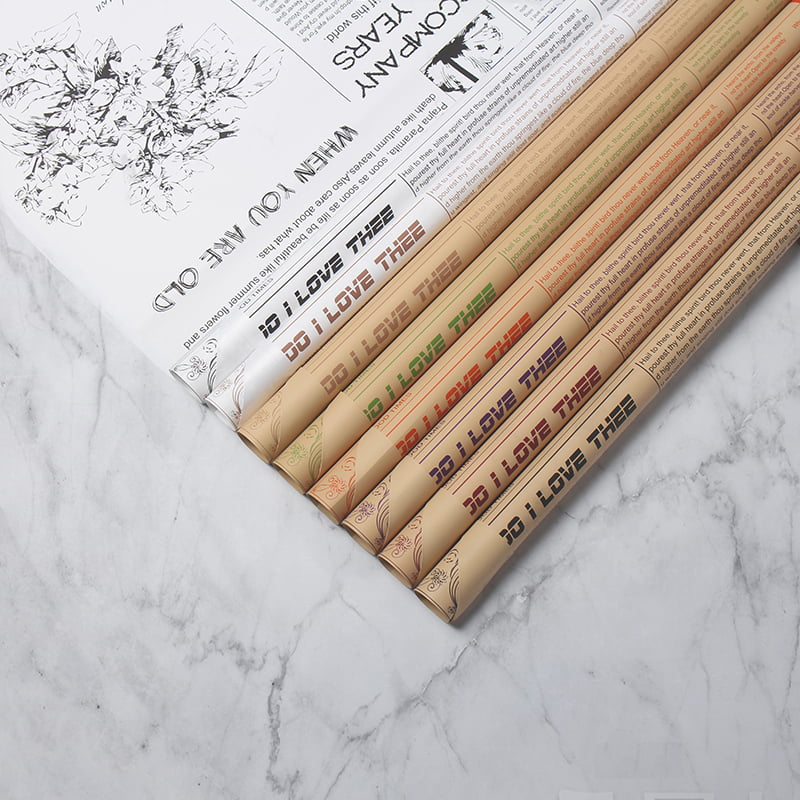 Wholesale MYHC-21 Retro Newspaper Style Cowhide Flowers Wrapping Paper Factory, Jiangxi Lixuan new material Technology Co., Ltd is China wholesale MYHC-21 Retro Newspaper Style Cowhide Flowers Wrapping Paper suppliers...View Product →
For a modern, high-end finish, matte films behave differently: they are thicker than kraft, so they hold a slow, rounded fold instead of a sharp corner. A good example is this six-colour matte flower packaging film in the standard 57 by 57 centimetre size. It works best when you fold at a wide angle, almost like wrapping a present, then let the film curve around the bouquet naturally.
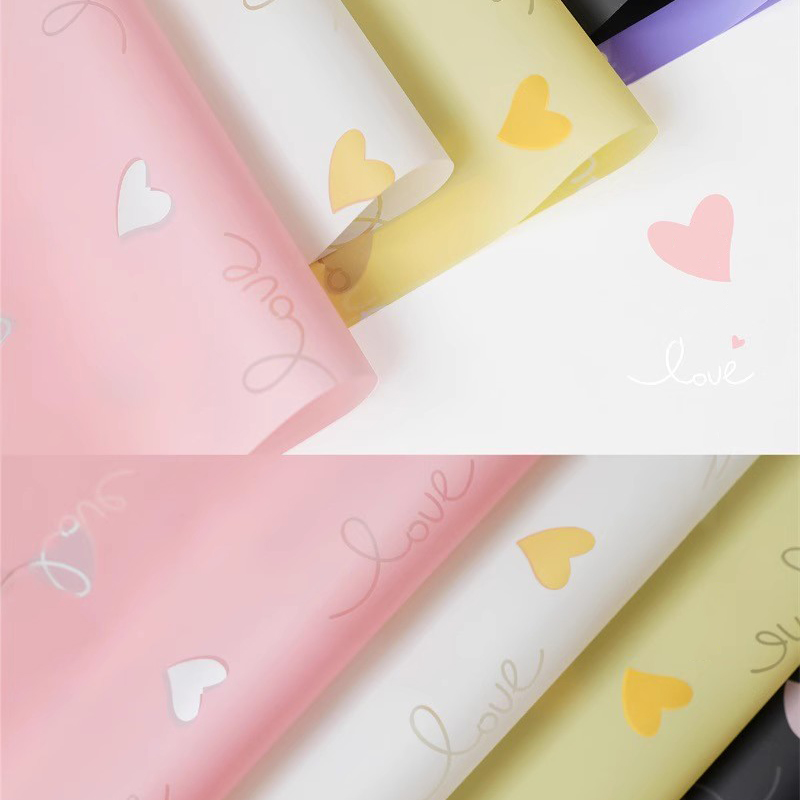 Wholesale MYHC-75 6 Colors 57×57cm (±2cm) Matte Flower Packaging Film Factory, SJiangxi Lixuan new material Technology Co., Ltd is China wholesale MYHC-75 6 Colors 57×57cm (±2cm) Matte Flower Packaging Film suppliers ...View Product →
Common Folding Mistakes and How to Avoid Them
Most wrapping problems come from a few recurring errors. Recognise these early and your folds will improve quickly.
- Asymmetric folds: If the two sides of the paper are not level, the bouquet will lean. Measure the paper edges before folding and adjust at the first sign of imbalance.
- Folding too tightly: Over-tightening the paper around the stems compresses the flower heads and makes the bouquet look small. Leave a thumb-width of space between the paper and the stems.
- Folding at the wrong height: The fold line should sit just below the flower heads, not halfway down the stems. If the paper comes up too high, it hides the blooms; if it sits too low, the wrap feels unstable.
- Using tape too early: Tape will not stick properly if the paper is still shifting. Hold the fold in place with one hand, then tape or tie after the silhouette is correct.
Practice each fold on a single sheet of paper before using it on a live bouquet. This is the fastest way to internalise the movement and avoid wasting premium materials.
Practice Makes a Consistent Bouquet
Folding flower wrapping paper is a motor skill, not a theory. The difference between a good wrap and a great wrap is often just repetition. Set aside a clean table, keep a stack of paper at the same size, and run through the diagonal fold and the triangle fold several times each with no flowers, using a water bottle or a roll of tape as a stand-in for the stems. You will quickly develop a rhythm that carries over to busy shop hours.
For more visual and practical techniques, read our detailed guide on how to wrap flowers like a pro. The same principles apply whether you are making a two-minute retail wrap or a finished wedding bouquet. Once the fold becomes automatic, you can focus on matching the paper to the personality of the flowers, and that is where your shop's signature style really comes from.
 +86-18270363850
